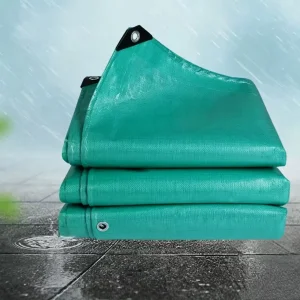
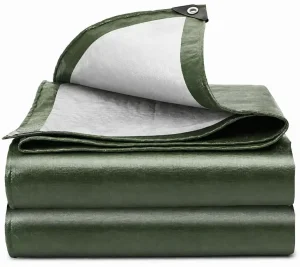
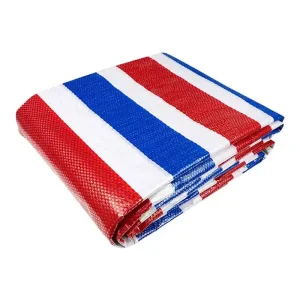
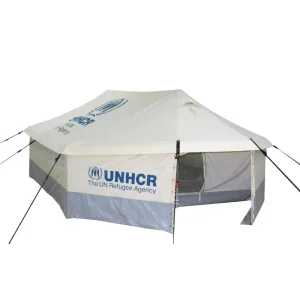
Explore our factory-direct industrial covers engineered for logistics, construction, agriculture, and extreme weather shielding.
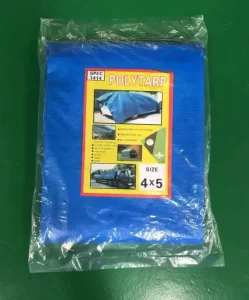
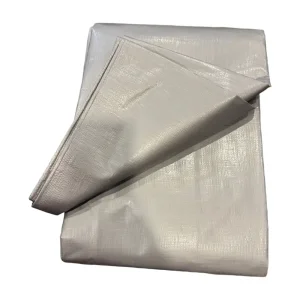
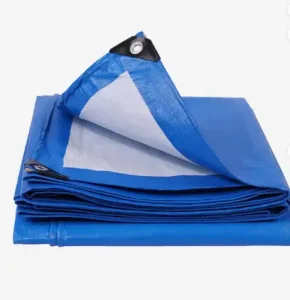
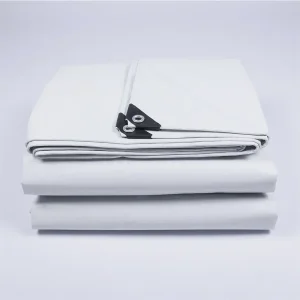
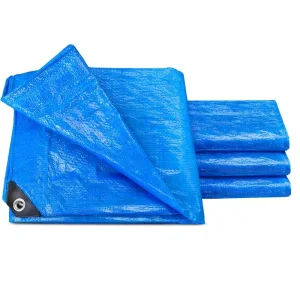
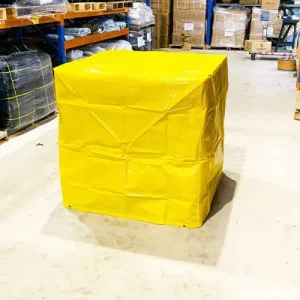
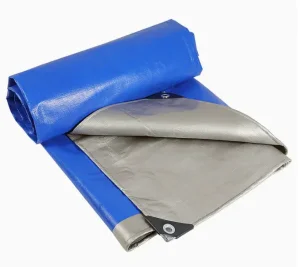
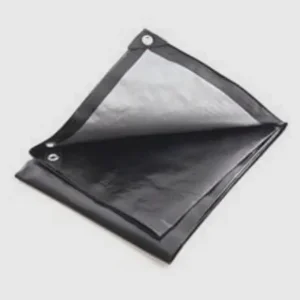
The global heavy-duty technical textiles sector is experiencing a structural migration from conventional laminated materials toward high-performance Knife Scraping Tarpaulin (PVC Doctor Blade Coated Fabrics). Characterized by unmatched inter-layer adhesion, superior tensile elasticity, and high hydrostatic resistance, knife-scraped poly-vinyl chloride (PVC) and polyolefin textiles represent the gold standard for long-term outdoor containment, architectural membranes, and heavy-freight logistics shielding.
In modern industrial manufacturing, the phrase knife scraping refers to an advanced liquid PVC plastisol application technique. Unlike traditional hot-melt or cold-lamination processes—where pre-extruded plastic films are pressed onto a woven scrim using adhesive rollers—knife coating utilizes a precision steel doctor blade (knife) positioned directly above a high-tenacity polyester woven base cloth. As the base fabric moves under high tension, liquid plastisol is evenly scraped across the weave, penetrating deep into the inter-yarn voids before undergoing heat-curing in a thermal gelation tunnel.
The global demand for wholesale knife scraping tarpaulin is expanding at a CAGR of 6.8%, driven by distinct industrial needs across continents:
Because the liquid PVC plastisol encapsulates individual yarn fibers during the scraping process, knife-scraped tarpaulins achieve peeling strengths exceeding 100 N/5cm—eliminating the air pockets and film separation common in laminated alternatives.
Formulated with specialized cold-crack additives and UV masterbatches, knife-scraped tarpaulins maintain high elasticity down to -30°C and resist severe solar degradation in tropical or desert environments with exposure over 500 kLy.
Direct chemical integration of the PVC layer enables flawless High-Frequency (HF) and Hot-Air seam welding, resulting in 100% watertight structural joins that match the tensile strength of the raw fabric itself.
In-depth laboratory performance metrics evaluating mechanical durability, longevity, and structural suitability for industrial applications.
| Performance Parameter | Knife Scraping Coated PVC | Hot-Melt Laminated PVC | High-Density Polyethylene (PE) |
|---|---|---|---|
| Base Cloth Denier | 1000D × 1000D / 1300D × 1300D | 500D × 500D / 1000D × 1000D | Woven HDPE Tape (600D - 1500D) |
| Adhesion Strength (Peel) | > 110 N / 5cm (Exceptional) | 40 - 65 N / 5cm (Moderate) | Mechanical Bond Only (Low) |
| Tensile Strength (Warp/Weft) | 3000 / 2800 N / 5cm | 1800 / 1600 N / 5cm | 800 / 750 N / 5cm |
| Tear Strength (Trapezoidal) | > 350 N | > 180 N | > 90 N |
| Hydrostatic Head Pressure | > 100,000 mm H₂O | > 50,000 mm H₂O | > 15,000 mm H₂O |
| Service Life Expectancy | 8 to 15 Years (Outdoor) | 3 to 5 Years (Outdoor) | 1 to 3 Years (Outdoor) |
| Surface Finish Options | Acrylic / PVDF Lacquer (Gloss/Matte) | Standard Matte / Semi-Gloss | LDPE Film Lamination |
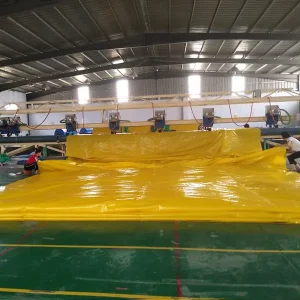
China has solidified its leadership position in the global technical textile domain, accounting for over 65% of the worldwide knife-scraped tarpaulin manufacturing capacity. Centered in key industrial clusters across Shandong (such as Linyi) and Zhejiang (Haining), Chinese factories integrate the entire supply chain—from high-tenacity polyester yarn extrusion and high-speed Dornier rapier weaving to advanced German-engineered knife coating lines and automated converted edge finishing.
How environmental factors, regional regulatory standards, and industry demands dictate target tarpaulin specifications around the globe.
Operated under severe ambient temperatures reaching 50°C and intense UV irradiation, tarpaulins supplied to Saudi Arabia, UAE, and Qatar require heavy UV stabilization masterbatch (3-5% Hindered Amine Light Stabilizers - HALS). Primary uses include sandstorm protection covers, oilfield machinery shrouds, and shade sails requiring thermal stability up to +70°C without plasticizer migration or surface tackiness.
Buyers in Germany, France, the US, and Canada prioritize strict safety and environmental standards. Materials must comply with EU REACH regulations (SVHC-free, low heavy metals) and strict flame resistance norms (DIN 4102 B1, EN 13501-1 Class B-s2,d0, NFPA 701). PVDF lacquered knife-scraped fabrics (650–900 GSM) are extensively imported for side-curtain trucks, Rubb hall commercial warehouses, and architectural membrane structures.
Featuring intense rainfall seasons and high humidity, markets in Brazil, Chile, Indonesia, and Vietnam demand knife-scraped fabrics treated with biocide anti-mildew compounds. Core applications include open-pit mining heap leach pads, heavy agricultural grain covers, emergency disaster relief, and flood containment barriers where continuous water head pressure exceeds 100 kPa.
Logistics operators require 650 GSM to 900 GSM knife-scraped fabrics engineered with anti-abrasion coatings and reinforced corner designs. These custom covers withstand continuous mechanical tension from ratchet straps, highway wind drag, and daily friction against steel trailer frames during cross-border freight transit.
When sourcing knife-scraped tarpaulin rolls or finished ready-made sheets directly from Chinese factories, international buyers must establish rigorous procurement protocols to guarantee material consistency and prevent field failure. Below is the technical inspection workflow recommended by senior quality assurance engineers:
Verify that the advertised GSM (Grams per Square Meter) reflects the correct ratio between base fabric scrim and PVC coating. For instance, a premium 650 GSM knife-scraped tarpaulin should feature a 1000D × 1000D (18×18 or 20×20) base cloth weighing roughly 170-190 g/m², with the remaining 460-480 g/m² comprised of PVC plastisol, plasticizers, and protective surface lacquering.
Unlacquered PVC tarpaulins attract ambient dust, air pollutants, and industrial grime rapidly due to plasticizer migration. For outdoor uses exceeding 2 years, insist on single-side or double-side surface lacquering:
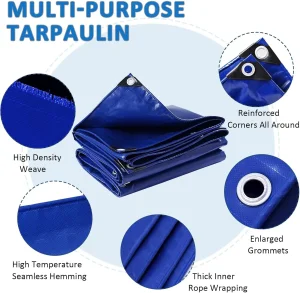
Finished tarpaulin sheets require robust peripheral reinforcement. Ensure your manufacturer utilizes high-frequency hot-wedge hem welding embedded with polypropylene (PP) or solid steel perimeter ropes. Brass or stainless-steel eyelets should be installed at 50 cm or 100 cm pitch with triangular plastic corner pads to distribute localized wind loads across the sheet.
Expert technical answers addressing specification, minimum orders, climate customization, and export logistics.
Knife-scraped tarpaulin is manufactured by applying liquid PVC plastisol directly over a moving woven scrim using a precision doctor blade, allowing deep penetration into the yarn matrix prior to heat gelation. Laminated tarpaulin, by contrast, bonding pre-extruded PVC films onto the scrim via pressure rollers. Knife-scraped fabrics exhibit significantly higher peel strength (>100 N/5cm vs 40-60 N/5cm), preventing delamination, air bubbling, and premature aging under severe wind, friction, and thermal cycles.
Selection depends on structural stress and exposure longevity:
UV longevity is engineered during compounding. Chinese producers add 3% to 5% high-grade Hindered Amine Light Stabilizers (HALS) alongside Titanium Dioxide (TiO₂) UV-blockers into the PVC plastisol batch. Accelerated weathering test chambers (QUV test according to ISO 4892-2) verify that high-UV formulations retain over 80% of their tensile and tear strength after 3,000 hours of continuous UV and thermal exposure.
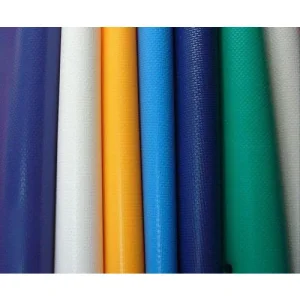
For standard stocked color ways (Blue, Silver, Green, White) in standard roll widths (2.0m to 3.2m), MOQs start at 2,000 square meters per specification or one consolidated 20-foot container mix. For custom color matching (RAL/Pantone), special flame retardancy (B1/M2), or custom surface printing, MOQ is typically 3 to 5 metric tons per run. Production turnaround averages 15 to 25 days post sample and artwork sign-off.
Yes. Knife-scraped PVC fabrics treated with acrylic or PVDF lacquers provide an excellent surface for digital UV printing, solvent screen printing, and automated flexographic printing. Branded truck side-curtains and commercial advertising banners retain crisp graphic clarity without ink peeling or color fading when exposed to rain and sun.
Discover specialized PE, PP, and scratch-resistant PVC tarpaulin variants for agricultural, industrial, and commercial buyers.