Direct factory production lines offering engineered waterproof sheets, custom GSM balances, and certified UV protection.
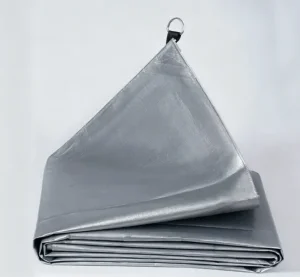
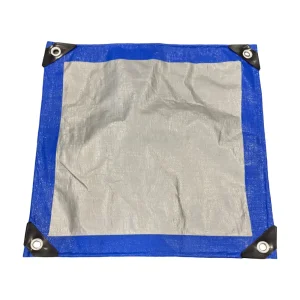
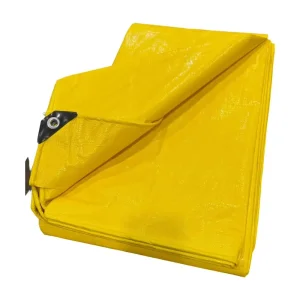
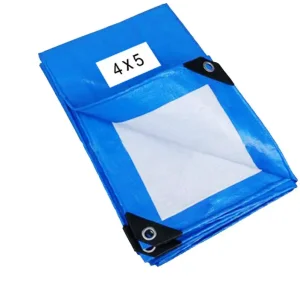
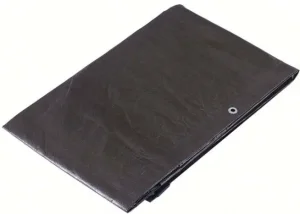
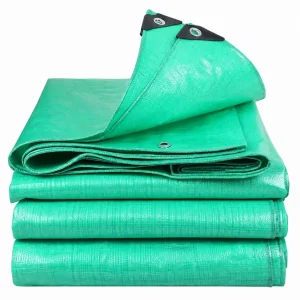
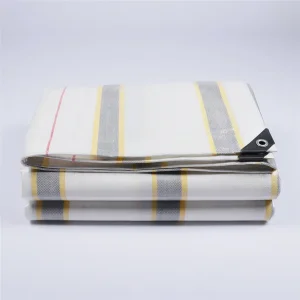
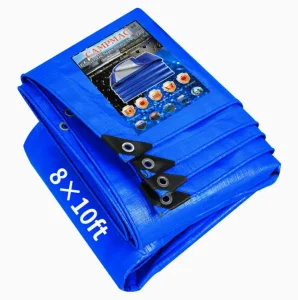
Polyethylene (PE) tarpaulin sheets represent a critical baseline asset within global industrial logistics, commercial construction, agricultural infrastructure, and emergency humanitarian relief. Far beyond simple plastic sheeting, modern high-performance PE tarpaulins are sophisticated multi-layer polymer laminates engineered to deliver high tensile strength, hydrostatic water resistance, chemical inertness, and precise UV degradation control.
Modern PE tarpaulins utilize a triple-layer structure comprising a central High-Density Polyethylene (HDPE) woven mesh core (fabric grid) laminated on both sides with Low-Density Polyethylene (LDPE) molten films. This architectural fusion combines the exceptional tensile strength of oriented HDPE tapes with the seamless, non-porous waterproofing capabilities of LDPE coatings.
Unprotected polyolefins degrade under solar ultraviolet (UV) radiation due to photo-oxidation. Direct manufacturer formulation incorporates 3% to 5% Hindered Amine Light Stabilizers (HALS) and Carbon Black masterbatches directly into the polymer extrudate, ensuring field longevity in extreme environments like the Middle East, Sub-Saharan Africa, and Australia.
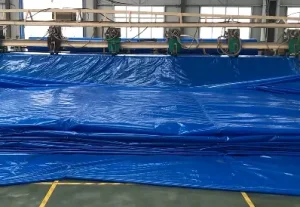
Established direct-factory operations—such as Linyi Xinshengyang Plastic Products Co., Ltd. (Star Tarpaulins) operating out of Shandong, China—maintain strict quality control across every production stage: raw resin compounding, tape drawing, circular loom weaving, double-sided extrusion lamination, and automated grommet insertion.
Procurement intent among enterprise importers, wholesale distributors, and government purchasing bodies has evolved significantly. Buyers no longer evaluate suppliers solely on unit price per square meter; purchasing decisions are now governed by lifetime cost analysis, material purity, supply chain risk mitigation, and climate adaptation standards.
| Procurement Sector | Primary Market Driver | Key Technical Requirements | Recommended GSM & Spec |
|---|---|---|---|
| Commercial Construction & Civil Engineering | Containment, scaffold protection, concrete hydration control | High tear propagation resistance, flame retardancy (DIN 4102 B1), reinforced hems | 140 GSM – 260 GSM (10x10 to 14x14 Mesh) |
| Freight, Logistics & Maritime Transport | Cargo weatherproofing, flatbed trailer covers, container liners | Double-sided LDPE lamination, thermal stability (-40°C to +80°C), rust-proof eyelets | 180 GSM – 300 GSM (Heavy Duty) |
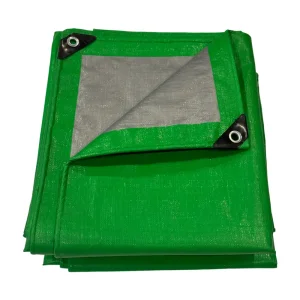
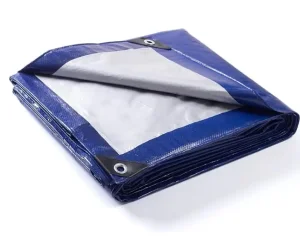
| Agricultural Operations & Silage | Crop protection, hay stack coverage, grain drying sheets | UV stabilization (HALS 5%), non-toxic food-grade resins, moisture barrier | 90 GSM – 160 GSM (Dual Color: Blue/Silver or Green/Silver) |
| Humanitarian & Emergency Shelter (NGOs) | Rapid deployment, temporary housing, disaster mitigation | Lightweight high-strength ratio, compact pack volume, extreme tear threshold | 80 GSM – 110 GSM (UNHCR / UNICEF standard specs) |
Unlike PVC-coated fabrics which contain phthalate plasticizers and heavy metals that complicate end-of-life handling, 100% Polyethylene tarpaulins are mono-material structures. Global ESG directives favor PE sheeting due to its complete mechanical recyclability into secondary polyolefin pellets.
Escalating weather volatile risks require heightened hydrostatic head resistance (exceeding 10,000 mm H₂O) and increased wind-load endurance. Advanced ultrasonic seam welding replaces sewn seams to eliminate stitch-hole leakage points under pressure.
Global container shipping economics dictate optimal roll packing density. Export-oriented factories now supply seamless wide-width rolls (up to 6 meters wide without welding), reducing labor costs for downstream converters and maximizing container floor space efficiency.
To specify the correct tarpaulin for industrial applications, procurement directors must evaluate five fundamental structural parameters: Polymer formulation, weave density (mesh count), yarn denier, coating thickness, and edge finishing engineering.
Virgin High-Density Polyethylene granules (Melt Flow Index ~0.7-0.9 g/10min) are melted, extruded into a thin film, water-quenched, and slit into micro-tapes. These tapes are oriented stretching under thermal tension to align polymer chains, resulting in tensile strengths exceeding 4.5 g/denier.
The oriented tapes are loaded into high-speed circular looms to form the structural matrix (scrim). Mesh counts vary from standard 8x8 per square inch for light-duty tarps, up to 14x14 per square inch for heavy-duty structural tarpaulins capable of resisting wind shear forces.
The woven HDPE inner mesh passes through a dual-extrusion coating line where molten Low-Density Polyethylene (LDPE) mixed with color masterbatches, UV stabilizers, and anti-block additives is cast onto both sides simultaneously at 300°C, forming a completely impermeable seal.
A tarpaulin's failure point rarely occurs in the center of the sheet; structural breakdown typically originates at the edges, eyelets, or welded seams under stress. Premier manufacturing protocol incorporates:
PE tarpaulin sheets serve as essential equipment across diverse global sectors. Matching the precise technical specification to operational environments ensures extended service life and reduced operational downtime.
Used extensively for agricultural crop coverage, grain drying mats, silage caps, and temporary pond liners. High-density silver-coated sheets reflect solar heat, preventing thermal build-up under the tarp and preserving crop moisture balance.
Protects active job sites from rainfall, contains dust debris on scaffolding frames, and acts as hydration-retention blankets for freshly poured concrete foundations to achieve optimal compressive cured strength.
Engineered flatbed trailer covers, open-top container tarps, and railway cargo covers. Outfitted with abrasion-resistant LDPE outer coats to withstand road debris impact, wind vibration, and chemical diesel splash exposure.
Navigating regional import compliance requires comprehensive verification. Standard manufacturing practices at Star Tarpaulins (Linyi Xinshengyang Plastic Products Co., Ltd.) integrate international laboratory testing standards to guarantee seamless port customs clearance and market acceptance.
Every batch undergoes stringent physical testing compliant with global frameworks:
Tailored options designed for distinct geographical markets:
Four-tier continuous verification during production:
The synthetic textile industry is undergoing rapid technical evolution driven by sustainability mandates and advanced material science. Future developments in PE tarpaulin manufacturing center around three core innovation pillars:
Advanced extrusion technologies now allow up to 30% Post-Industrial Recycled (PIR) or Post-Consumer Recycled (PCR) polyolefin blends within the inner woven HDPE matrix without compromising tensile elongation or tear thresholds, lowering overall carbon footprint.
Integration of nano-titanium dioxide (TiO₂) and graphene micro-additives into outer LDPE lamination layers to enhance UV reflectance, create self-cleaning hydrophobic surfaces, and extend outdoor service lifespans by up to 200% in high-irradiance zones.
Development of multi-spectrum infrared reflective tarpaulins engineered specifically for livestock shelter and agricultural storage, suppressing internal radiance temperatures by 5°C to 12°C compared to conventional dark tarpaulins.
Specialized poly woven sheeting, roll goods, truck covers, and multi-purpose industrial protection fabric.
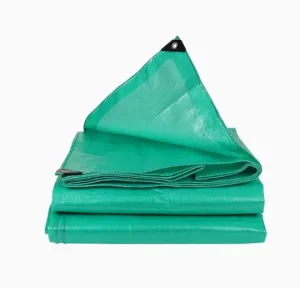
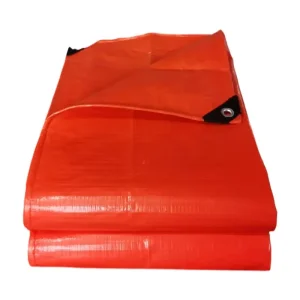
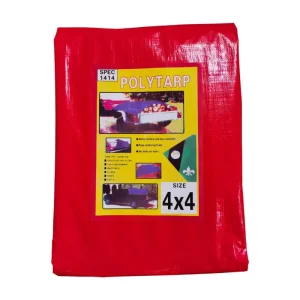
Technical responses curated by our chemical engineering and global logistics teams to streamline your sourcing evaluation.
PE (Polyethylene) tarpaulins are lightweight multi-layer laminated fabrics constructed from a woven HDPE core and LDPE outer coatings. They offer an exceptional strength-to-weight ratio, complete recyclability, and cost-efficiency for short-to-medium-term outdoor coverage (50–300 GSM). PVC (Polyvinyl Chloride) tarpaulins are heavier, liquid-coated polyester scrims (450–900 GSM) designed for permanent structural installations, truck side curtains, and multi-year heavy industrial use. PE is preferred for lower tare weight, environmental sustainability, and economic volume coverage.
Selection depends on intended exposure and handling stress: Light-duty consumer retail tarpaulins range from 60 to 90 GSM. General hardware, agricultural crop covering, and DIY retail lines perform best between 100 and 160 GSM. Heavy industrial scaffold sheeting, long-term machinery covers, and transport tarps require 180 to 300 GSM. Higher GSM correlates directly with increased yarn denier, weave density (e.g., 14x14 mesh), and thicker LDPE waterproofing coats.
Polyethylene is inherently susceptible to solar ultraviolet light photo-oxidation. To prevent embrittlement, cracking, and loss of tensile strength, our manufacturing process incorporates 3% to 5% Hindered Amine Light Stabilizers (HALS) masterbatch directly into both the inner extruded HDPE tapes and outer LDPE lamination resins. This technical formulation ensures 12 to 36 months of continuous outdoor service life even under intense UV conditions (e.g., Middle East, Sub-Saharan Africa, Australia).
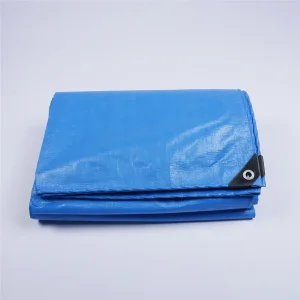
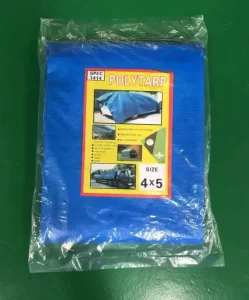
As a direct original manufacturer, Linyi Xinshengyang Plastic Products Co., Ltd. provides complete OEM customization: precise finished sheet dimensions (from 2x3m up to 20x30m+), roll widths up to 6 meters, dual-color combinations (Blue/Orange, Silver/Black, Green/Silver), custom eyelet materials (Aluminium, Brass, Polycarbonate), eyelet spacing (50cm, 100cm, or custom pitch), corner reinforcement patches, surface logo printing (up to 4 colors), and custom retail polybags with branded display cards.
Standard OEM production runs require a minimum order quantity of 3 Metric Tons per specification, or one mixed 20-foot full container load (FCL) combining multiple standard sizes. Standard production lead time is 15 to 25 days following pre-production sample confirmation and deposit receipt. Established roll stock specifications can be dispatched in as few as 10 working days.
Request direct factory container quotations, engineering sample swatches, or technical specification compliance datasheets. Our dedicated export engineering team responds within 24 business hours.