Explore our primary inventory of heavy-duty, medium-weight, and specialized poly & PVC tarpaulins available for direct factory shipment.
An in-depth whitepaper analysis of PVC & PE tarpaulin manufacturing methodologies, global market shifts, and polymer performance engineering.
The global industrial flexible membrane market is currently undergoing a structural evolution, driven by expanding infrastructure investments, intermodal logistics growth, and dynamic climate challenges. Industrial-grade flexible polymers—primarily Polyvinyl Chloride (PVC) coated fabrics and High-Density Polyethylene (HDPE/PE) laminated textiles—form the protective baseline for modern logistics, civil engineering, agriculture, and architectural enclosures.
As international freight rates fluctuate and sustainability mandates tighten, global B2B procurement strategies are shifting from spot-market trading toward integrated OEM/ODM manufacturing partnerships. Buyers in North America, the European Union, the Middle East, and Latin America demand verifiable chemical formulations, precise GSM tolerances, strict flame retardancy compliance, and extended UV lifespan.
Understanding the molecular structural difference is critical for optimizing operational lifespans under varying field conditions:
How Linyi Xinshengyang Plastic Products Co., Ltd. (Star Tarpaulins) delivers structural cost efficiency and vertical quality integration.
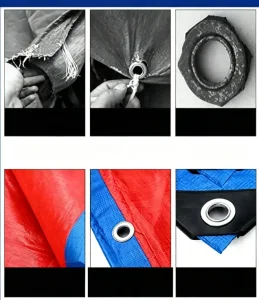
Unlike regional conversion workshops that buy third-party fabrics, our 30,000 square meter plant controls the entire processing cycle: virgin polymer granule extrusion, high-speed tape drawing, circular/flat bed weaving, double-sided hot-melt lamination/knife-coating, ultrasonic heat-sealing, and automated eyelet punching.
Operating continuously since 2006, our technical team enforces batch-level testing under real-world stress parameters. Tensile strength, hydrostatic water head resistance, tear propagation limits, coating adhesion shear stress, and QUV accelerated weathering resistance are documented for every production batch.
Situated in Shandong Province—the epicenter of global synthetic polymer manufacturing—we leverage immediate access to Qingdao and Lianyungang deep-water ports. Raw resin supply stability and centralized chemical clusters allow us to absorb raw material price volatility while maintaining uninterrupted 15-25 day production lead times.
A critical vulnerability in commercial tarpaulins is photo-oxidative degradation caused by UV radiation and thermal heat buildup. Star Tarpaulins incorporates specialized UV masterbatches containing Hindered Amine Light Stabilizers (HALS) alongside Titanium Dioxide ($TiO_2$) rutile pigments. For tropical and high-altitude implementations, our chemical dosage is elevated to 3%–5% UV stabilizer by weight, extending material structural integrity under 180,000 Langleys/year solar intensity environments.
Advancing functional textile chemistry to meet next-generation industrial, environmental, and architectural performance metrics.
Traditional PVC flexible formulations historically relied on DEHP/DOP phthalate plasticizers. Our R&D technical pipeline has systematically transitioned to bio-based and non-phthalate plasticizers (DOTP, DINCH, and epoxidized soybean oil). This transition ensures compliance with strict European REACH Annex XVII regulations, EU RoHS 3 standards, and California Proposition 65 without compromising low-temperature flexibility or flame retardation.
To eliminate dirt accumulation and industrial pollutants on long-term structures (such as dome covers and truck side curtains), our premium PVC lines apply top-surface Polyvinylidene Fluoride (PVDF) or cross-linked acrylic lacquer coatings. This ultra-smooth top layer creates a micro-hydrophobic surface where rainfall naturally cleans atmospheric particulate buildup, preventing chemical staining and fungal spore adhesion.
Industrial safety regulations require strict flame resistance in indoor and enclosed logistics operations. By incorporating antimony trioxide ($Sb_2O_3$), aluminum trihydroxide (ATH), and halogen-free phosphorus additives into the polymer layer, our heavy-duty fabrics meet global fire certifications including DIN 4102-1 B1/B2, NFPA 701, and EN 13501-1 standards, self-extinguishing within seconds of flame removal.
Addressing global plastic waste reduction, our research unit is expanding full PP/PE mono-material woven structures. By eliminating cross-polymer contamination between core weave and surface coating layers, our 100% Polyolefin tarpaulins can be directly shredded and re-granulated into industrial plastic products at end-of-life without requiring chemical separation.
Tailoring weight, denier, weave density, and chemical additives to regional operational demands worldwide.
Recommended Spec: 650 GSM to 900 GSM PVC Coated Fabric (1000D x 1000D, 20x20 weave).
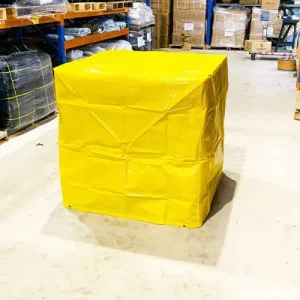
Long-haul highway logistics require maximum tear resistance, abrasion tolerance, and thermal stability. Our truck curtain-side fabrics undergo high-frequency RF welding to attach reinforced structural belts, D-rings, and heavy-duty corner patches that withstand continuous wind turbulence and high-speed highway friction.
Recommended Spec: 150 GSM to 280 GSM Insulated PE Concrete Blankets.
During winter concrete hydration in Northern Europe, North America, and Northeast Asia, freezing temperatures ruin structural integrity. Our closed-cell foam laminated PE curing blankets maintain hydration heat, prevent surface cracking, and shield uncured concrete from snow impact.
Recommended Spec: 120 GSM to 220 GSM Green/Black UV PE Tarp.
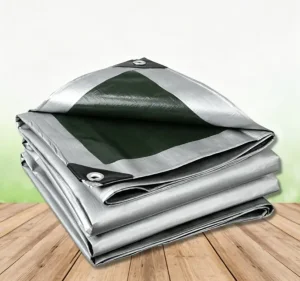
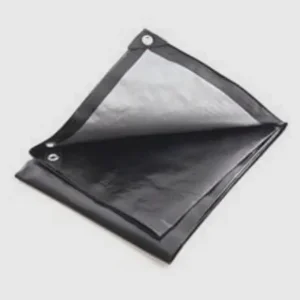
For grain drying, hay bale protection, and livestock shading in high-UV agricultural belts (Australia, Middle East, Sub-Saharan Africa), our double-sided silver/green tarpaulins reflect up to 85% of infrared radiant heat, reducing interior moisture condensation and crop spoilage.
Recommended Spec: 550 GSM to 850 GSM Blackout PVC Fabric.
Used for commercial trade show tents, relief shelters, and military field installations. Incorporating an inner opaque blackout layer blocks 100% of solar radiation, reducing interior HVAC air conditioning energy consumption by up to 30%.
Recommended Spec: 300 GSM to 650 GSM High-Purity Coated Liners.
Pond liners, temporary liquid storage tanks, and industrial containment barriers require food-contact safe, non-toxic formulations. Our heavy-duty liners resist chemical leaching, puncture from rocky sub-soils, and biological algae growth.
Recommended Spec: 80 GSM to 200 GSM White/Blue UN/UNHCR Spec PE Sheets.
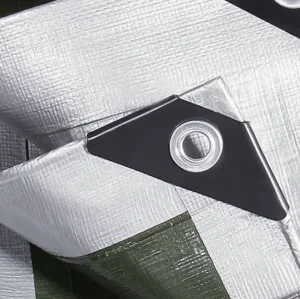
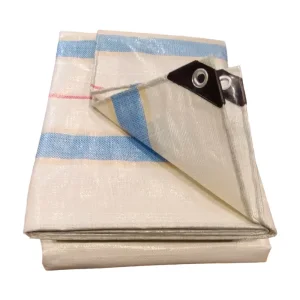
Engineered to precise international NGO standards featuring pre-punched aluminum/brass eyelets at 1-meter intervals, reinforced webbed corners, and high tensile resistance for rapid emergency human shelter deployment.
Ensuring seamless international procurement through rigorous documentation, customization options, and end-to-end quality validation.
Every shipment manufactured at our Linyi facility undergoes four distinct quality control checkpoints prior to container sealing:
We provide extensive OEM manufacturing services catered to regional wholesale brands, hardware retail chains, and commercial contractors:
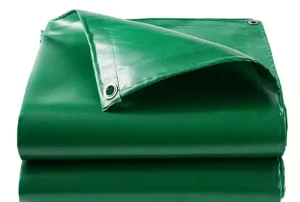
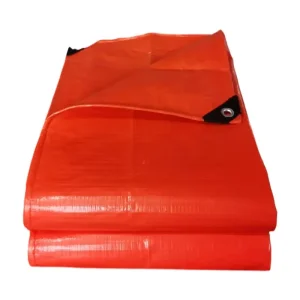
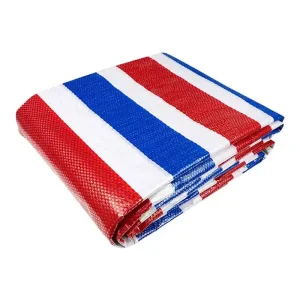
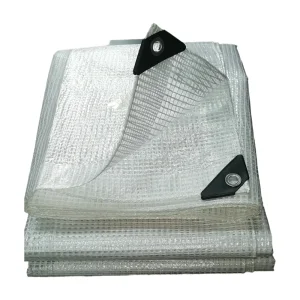
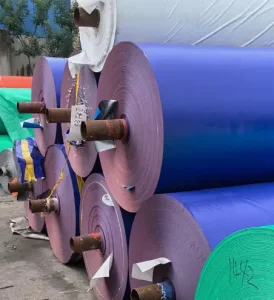
Discover specialized rolls, striped designs, grid mesh fabrics, and heavy-duty truck covers direct from our plant.
Expert answers from our polymer engineering team regarding specifications, procurement, chemical properties, and logistics.
PE (Polyethylene) tarpaulins are constructed from woven HDPE tapes laminated on both sides with LDPE plastic film. They are lightweight (typically 60 GSM to 300 GSM), economical, and 100% recyclable, making them ideal for short-to-medium term covering. PVC (Polyvinyl Chloride) tarpaulins utilize a high-tenacity polyester woven scrim coated with liquid PVC compound via knife-coating. PVC tarpaulins are significantly heavier (450 GSM to 900+ GSM), offering superior abrasion resistance, high physical tear strength, complete gas-tightness, and operational lifespans up to 10+ years under heavy industrial use.
Target GSM depends directly on exposure duration, mechanical stress, and climate conditions:
UV degradation occurs when ultraviolet photons break down carbon polymer chains (photo-oxidation). We incorporate 3% to 5% high-grade Hindered Amine Light Stabilizers (HALS) and Rutile Titanium Dioxide ($TiO_2$) into the polymer matrix during tape extrusion and lamination. Every export batch intended for high-radiation regions is sample-tested under accelerated QUV weatherometers to guarantee structural tensile retention over the specified lifespan.
For standard stocked roll colors and specifications, our standard MOQ starts from a mixed 20ft container load (approx. 10-12 metric tons). Custom color matching (RAL/Pantone), custom GSM, surface printing, and custom retail packaging require a minimum of 3 to 5 tons per specification. Standard production lead time is 15 to 25 calendar days following pre-production sample approval and deposit confirmation.
Yes. By integrating flame-retardant additive compounds (such as antimony trioxide and organic phosphorus derivatives) into our PVC pastes and PE coatings, we manufacture tarpaulin fabrics certified to international flame standards, including German DIN 4102-1 B1/B2, US NFPA 701, and European EN 13501-1 Class B-s1,d0 standards.
For PE tarpaulins, high-temperature hot-air thermal bonding sealing machines apply double-overlap heat seals that exceed the tear strength of the surrounding base fabric. For heavy-duty PVC tarpaulins, we employ high-frequency (HF) radio-frequency welding machines. HF welding fuses the liquid PVC top layers at the molecular level, creating 100% air-tight and hydrostatically impervious seams suitable for oil booms, liquid bladders, and truck side curtains.
We welcome third-party quality inspection agencies (such as SGS, Bureau Veritas, TÜV, or Intertek) at our Linyi plant. Inspectors can audit raw material certificates, observe continuous production lines, perform random tensile/hydrostatic tests, verify carton packaging counts, and supervise container loading operations.