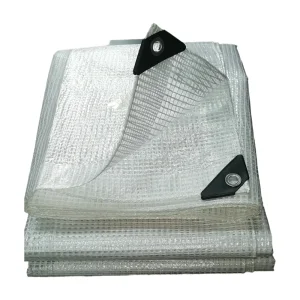
The Greater Seattle metro area and the broader Puget Sound economic corridor represent one of North America's most demanding micro-climates and industrial ecosystems. From severe maritime moisture along Elliott Bay to high-altitude log transport across the Cascade Range, commercial operators require heavy-duty containment materials that resist continuous hydrostatic pressure, atmospheric ozone exposure, tear propagation, and mechanical stress.
| Material Metric | Woven PP Tarpaulin Roll (Isotactic) | Standard PE Tarpaulin (HDPE/LDPE) | Heavy PVC Knife-Coated Tarp |
|---|---|---|---|
| Weight-to-Strength Ratio | Exceptional (High Tensile) | Moderate | Heavy (High Tare Weight) |
| Flex Fatigue Resistance | High (Ideal for frequent folding/rolling) | Moderate (Susceptible to creasing) | High |
| Melting / Softening Point | ~160°C (320°F) - Superior Heat Stability | ~120°C (248°F) | ~80°C (Softens in heat) |
| Hydrostatic Water Resistance | 100% Waterproof (Dual Extrusion Coated) | 100% Waterproof | 100% Waterproof |
| Recyclability & ESG Profile | 100% Recyclable Polyolefin Stream | 100% Recyclable Polyolefin Stream | Difficult / Contains Halogens |
| Seattle Market Cost Efficiency | Optimal Total Cost of Ownership (TCO) | Lowest Initial Cost | High Capital Expenditure |
Direct-factory running specifications engineered for Pacific Northwest industrial suppliers, building material distributors, and fleet managers.
Seattle is not merely a regional population center; it is a global trade gateway, advanced manufacturing hub, and maritime capital. Sourcing protective materials in King County, Pierce County, and Snohomish County requires a granular understanding of the region's operational environments.
The Northwest Seaport Alliance (Ports of Seattle and Tacoma) manages over 3 million TEUs annually. PP Tarpaulin rolls are heavily deployed for container lining, breakbulk cargo wrapping, and dockside pallet protection. The material must endure continuous exposure to marine salt spray without chemical degradation or pinhole leaking.
Driven by tech-sector expansion across Seattle, Bellevue, and Redmond, commercial building developments operate year-round despite Seattle's average of 150+ rainy days per year. Heavy-duty PP tarpaulins serve as temporary roof membrane caps, scaffold enclosure sheets, and concrete curing covers that withstand high wind loads off the Sound.
Aerospace manufacturing facilities in Everett and Renton move sub-assemblies, composite materials, and high-precision tooling between plants. PP tarpaulin rolls provide ultra-clean, dust-proof, moisture-barrier wrapping with low lint generation and high puncture resistance during inter-facility transit.
How vertically integrated polyolefin production in Linyi, Shandong empowers Seattle enterprise buyers with unmatched cost leadership, quality consistency, and custom roll engineering.
For Seattle-based importers, hardware retail chains, and industrial procurement agencies, sourcing direct from our Linyi production ecosystem eliminates multi-tiered distributor markups while unlocking advanced customization options. Our production line operates high-speed Starlinger tape extrusion lines, ultra-wide circular looms capable of weaving up to 6-meter master roll widths without thermal splices, and high-velocity dual-side lamination plants.
By controlling raw virgin PP resin compounding, masterbatch additive blending, fabric weaving, and coating in-house, we achieve strict dimensional tolerances, zero warp/weft weaving gaps, and uniform tensile distribution across every roll shipped to Port of Seattle container terminals.
Polypropylene is a semi-crystalline thermoplastic polymer belonging to the polyolefin group. When processed into woven tarpaulin rolls, its molecular configuration provides unique structural advantages ideal for demanding industrial environments.
During our extrusion process, PP granules are melted and slitted into flat tapes that undergo hot-draft orientation stretching. This aligns the polymer chains crystalline structure along the longitudinal axis, producing high-tenacity yarns (500 to 1500 Denier) that resist extreme tensile tension during heavy tie-down load-strapping on flatbed trucks.
Polypropylene maintains a crystalline melting temperature around 160°C to 165°C. For Seattle highway paving contractors and roofing contractors transporting hot asphalt or operating near high-heat industrial machinery, PP tarpaulins resist softening, sagging, and surface tackiness far better than standard PE tarps (melting point ~120°C).
The woven PP fabric core is fed through a continuous extrusion coating machine where molten Low-Density Polyethylene (LDPE) or custom PP-blend resin is applied to both sides. This creates a homogeneous 100% impermeable barrier against hydrostatic water pressure exceeding 150 kPa, completely preventing moisture ingress.
Engineered to excel across specific sector demands in Seattle, Tacoma, Bellevue, Everett, and surrounding commercial corridors.
Interstate 5 and Interstate 90 carry massive cargo volumes daily between Seattle ports and inland hubs. PP Tarpaulin rolls cut and converted into lumber tarps, machinery covers, and side curtain wraps protect cargo against high-velocity highway wind-shear and winter freezing rain across Snoqualmie Pass.
Commercial shipyards along Lake Union, Harbor Island, and Commencement Bay utilize flame-retardant treated PP tarpaulin rolls to construct temporary weather shields around vessels during sandblasting, repainting, and structural refitting operations.
Heavy-weight woven PP rolls act as underlayment geotextiles for Seattle civil works, preventing soil erosion, reinforcing unpaved access roads, and providing sediment control barriers compliant with King County environmental protection regulations.
Seattle enterprise buyers operate under strict Corporate Social Responsibility (CSR) and regional environmental compliance guidelines. Material selection must account for end-of-life disposal and carbon footprint reduction.
Unlike PVC-coated tarpaulins that contain plasticizers, heavy metals, and chlorine, PP Tarpaulin rolls laminated with polyolefin coatings are 100% recyclable mono-material structures (SPI Resin Code 5). Used covers can be clean-shredded, re-pelletized, and remanufactured into industrial pallets, drain pipes, and secondary construction plastics across Washington State recycling facilities.
Due to the superior strength-to-density ratio of woven polypropylene (0.91 g/cm³ versus PVC’s 1.38 g/cm³), PP tarps provide equal or greater tear strength at 40% less weight per square meter. This translates directly to reduced container shipping fuel consumption, lower haulage emissions, and safer manual handling for jobsite workers.
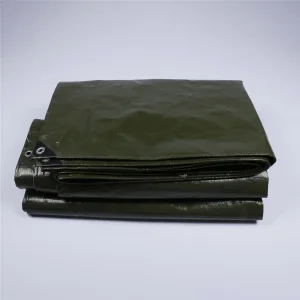
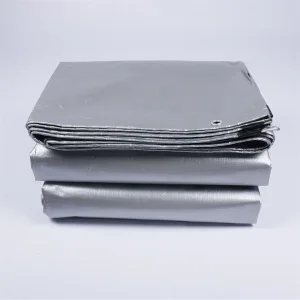
Explore our full range of waterproof, UV-stabilized, and high-tenacity polyolefin sheeting available for OEM container shipments to Seattle.
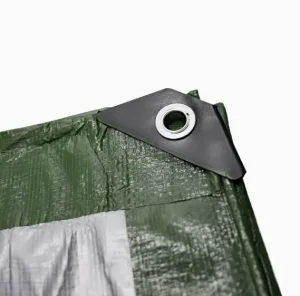
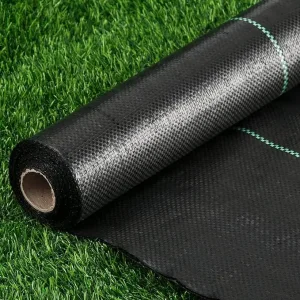
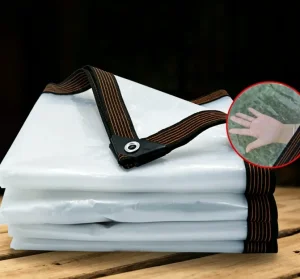
Optimizing container load factors, ocean freight routes to Puget Sound terminals, and strict ISO quality assurance verification.
We routinely ship 20ft GP, 40ft GP, and 40ft HQ full container loads (FCL) from Qingdao Port directly to Seattle and Tacoma port terminals. Average transit times range from 14 to 18 days, enabling lean inventory management for Pacific Northwest distributors.
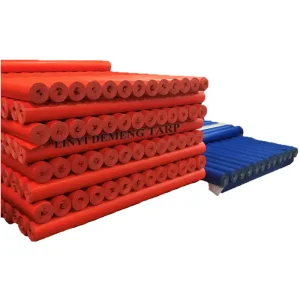
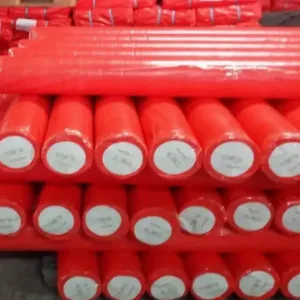
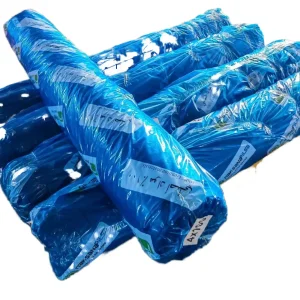
Export PP Tarpaulin rolls are wound on heavy-duty 3-inch or 4-inch reinforced cardboard cores, wrapped in moisture-proof woven poly film, and fitted with plastic end caps. Rolls can be packed loosely for maximum container volume utilization or palletized on ISPM-15 compliant heat-treated pallets.
Every manufacturing batch is issued a Factory Acceptance Test (FAT) report detailing GSM fabric weight tolerance (±3%), strip tensile strength (ASTM D751 standard), hydrostatic head bursting pressure, and UV masterbatch dosage verification prior to container loading.
Engineering insights and commercial procurement answers compiled by our senior B2B export directors.
Request technical specification datasheets, complimentary roll samples, container load calculations, and competitive FOB/CIF Seattle port quotations directly from our export engineering team.
Send Inquiry Now