Direct factory supply of high-tensile, UV-stabilized woven geotextile fabric and multi-purpose industrial covers engineered for Kenyan weather conditions.
How modern horticultural exporters in Naivasha, Mount Kenya, and the Rift Valley leverage UV-stabilized ground cover fabrics to meet global export standards and conserve water.
Kenya’s horticultural sector stands as a pivotal pillar of the national economy, contributing over KES 150 billion annually through exports of cut flowers, avocado, French beans, herbs, and macadamia. As major production hubs such as Lake Naivasha, Nakuru, Eldoret, Thika, and Nyeri expand their greenhouse footprint, commercial growers face twin pressure: escalating costs of manual weed management and increasingly stringent GlobalGAP regulations regarding chemical herbicide residues.
Traditional weed suppression methods reliance on chemical spray applications not only risks phytotoxicity in delicate cut flower varieties like intermediate roses and hypericum, but also accelerates soil degradation and water runoff contamination near vulnerable aquatic ecosystems like Lake Naivasha. Furthermore, manual hand-weeding incurs exorbitant labor operational costs and disrupts soil structure, promoting soil moisture loss under East Africa’s high-intensity solar irradiance.
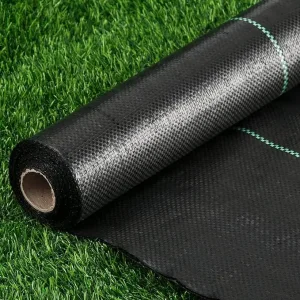
Our woven polypropylene weed barrier fabrics block Photosynthetically Active Radiation (PAR) below 0.5% transmission, suppressing tough tropical weeds like Cyperus rotundus (Nut grass) without chemical sprays.
Engineered capillary flow rate (>20 L/m²/s) allows drip irrigation moisture and liquid fertilizers to penetrate quickly while preventing soil puddling and root rot in greenhouse walkways.
Infused with 4.5% Hindered Amine Light Stabilizers (HALS) tailored for East Africa’s intense high-altitude UV radiation (UV Index 11+ in Naivasha and Mount Kenya region).
Supplying weed barrier fabric to Kenya requires an intimate understanding of regional agronomic environments:
Comparing high-density woven Polypropylene (PP), non-woven Polyester (PET) geotextiles, and composite landscape fabrics for Kenyan agricultural & civil projects.
| Performance Indicator | Woven Polypropylene (PP) Mat | Non-Woven PET Geotextile | PP/PE Laminated Tarpaulin | Kenyan Field Application |
|---|---|---|---|---|
| Grammage Range (GSM) | 90 GSM – 200 GSM | 100 GSM – 300 GSM | 120 GSM – 250 GSM | 100–130 GSM ideal for Rose Farm Walkways |
| Tensile Strength (Warp/Weft) | 16.5 kN/m / 14.0 kN/m | 8.0 kN/m / 7.5 kN/m | 12.0 kN/m / 10.5 kN/m | Resists heavy foot traffic & harvest carts |
| Water Permeability | High (25 L/m²/sec) | Ultra-High (45 L/m²/sec) | Impermeable (0 L/m²/sec) | Prevents standing water accumulation |
| PAR Light Blockade Rate | 99.6% Blockade | 92.0% Blockade | 100% Blackout | Completely eliminates weed seed germination |
| UV Lifespan (160 kLy/yr) | 5 Years Guarantee | 2–3 Years Guarantee | 3 Years Guarantee | Tested for Rift Valley UV degradation |
| Marker Grid Lines | Green / Yellow Lines at 15cm/25cm | None | Custom Grid Available | Allows rapid plant spacing in nurseries |
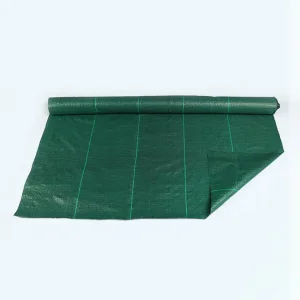
Our heavy-duty woven weed barrier rolls come integrated with high-visibility woven green or yellow alignment lines (typically spaced at 15 cm, 20 cm, or 30 cm intervals). For commercial export farms in Naivasha and Mt. Kenya, this precise grid allows farm laborers to plant rose bushes, herbs, and export vegetables in perfectly straight rows without manual measuring tapes, reducing planting labor costs by up to 35%.
Consistently delivering containerized geotextiles and agricultural fabrics from our 30,000m² manufacturing base directly to Mombasa Port.
Tailored geotextile solutions adapted to specific agricultural and civil engineering demands across Kenyan counties.
Laid inside high-tech rose greenhouses to suppress weeds along walkways and beneath raised flower beds. Reduces relative humidity inside greenhouses by preventing damp soil evaporation, suppressing Botrytis cinerea (grey mould) fungal outbreaks.
Installed across commercial fruit tree propagation nurseries in Thika, Murang'a, and Embu. Keeps potted seedlings clean, prevents soil-borne pathogens (like Phytophthora cinnamomi) from transferring to container bases, and allows rapid drainage.
Used as subsurface geotextile underlayment for driveway paving, access roads, and drainage trench lining in suburban Nairobi, Eldoret, and Kisumu. Separates aggregate layers from soft subgrade soil, preventing sinking and rutting.
Seamless importing from factory floor to Nairobi inland container depot (ICD) or Mombasa Port with full regulatory documentation.
Importing synthetic geotextiles and plastic woven ground covers into Kenya requires absolute compliance with national quality protocols enforced by the Kenya Bureau of Standards (KEBS). As an experienced direct manufacturer, we provide turnkey support to ensure your shipments pass inspection smoothly without demurrage charges at Mombasa Port.
Every shipment of weed barrier fabric destined for Kenya is eligible for PVoC inspection executed by authorized international testing bodies (such as SGS, Bureau Veritas, or Intertek). We supply comprehensive batch test certificates covering:
We pack ground cover rolls in tight, heavy-duty poly-sleeves with protected end-caps. Standard roll widths (1.0m, 1.5m, 2.0m, 3.0m, 4.0m, and 5.2m wide by 50m or 100m length) are engineered to maximize cubic capacity in 20ft and 40ft High Cube (HC) containers, reducing sea freight costs per square meter for Kenyan importers.
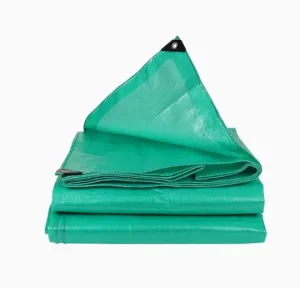
Are you a wholesale agro-input distributor in Nairobi, Nakuru, or Mombasa? You can consolidate full container loads (FCL) by combining Woven Weed Barrier Rolls, Heavy-Duty PE Tarpaulin Sheets, and Woven Layflat Irrigation Hose in a single shipment to minimize inventory holding costs.
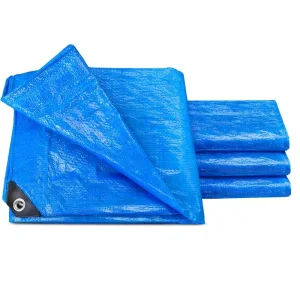
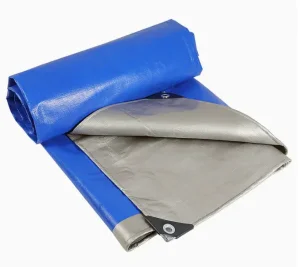
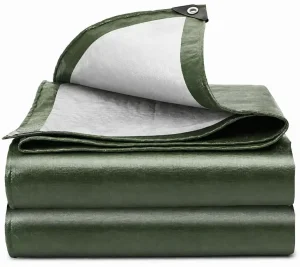
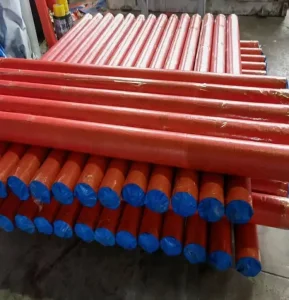
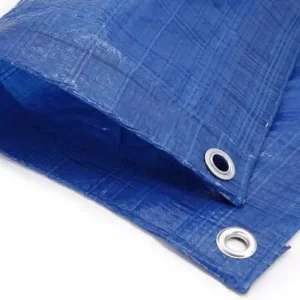
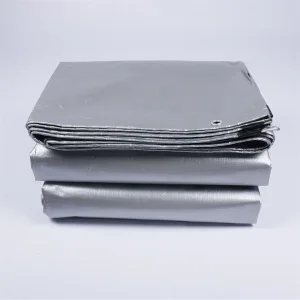
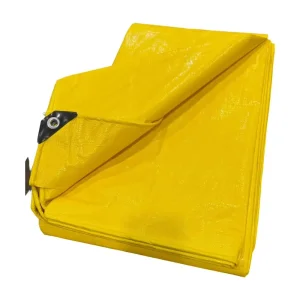
Browse our expanded line of heavy-duty tarps, truck covers, PE rolls, and woven geotextile variants manufactured for East Africa.
Expert agronomic and purchasing answers directly from our senior geotextile engineering team.
For high-traffic flower farm walkways in Naivasha and Nakuru, we strongly recommend our 100 GSM to 130 GSM heavy-duty woven polypropylene ground cover. This weight provides superior puncture resistance against harvest carts, worker boots, and wooden flower crates while preserving efficient capillary water drainage into the subsoil.
Locations near the equator with high altitude (such as Kenya's Rift Valley at 2,000+ meters above sea level) receive up to 30% higher ultraviolet (UV) intensity compared to low-altitude coastal zones. Unstabilized plastics disintegrate in less than 6 months. Our fabrics incorporate 3.5% to 5.0% HALS (Hindered Amine Light Stabilizers) masterbatch during filament extrusion, guaranteeing a 5-year operational lifespan against brittleness and tearing.
Our standard Minimum Order Quantity (MOQ) for custom roll sizes, colors, and specific GSM runs is 3 metric tons (or approximately one mixed 20ft container load). Normal factory production lead time is 15 to 20 days post-sample approval. Transit time from our factory to Mombasa Port is approximately 18–22 days via direct shipping lines.
Yes. In commercial drip-irrigated crops (such as avocado orchards or raised vegetable beds in Kenya), drip lines are typically installed *underneath* the fabric to minimize water evaporation under the tropical sun. The fabric's porous weave allows air circulation, preventing anaerobic soil conditions while suppressing any weeds activated by the moisture line.
Absolutely. We provide full technical support for Pre-Export Verification of Conformity (PVoC) audits conducted by SGS, Intertek, or Bureau Veritas prior to container dispatch from China. We guarantee our laboratory test values match KEBS standards for geotextile breaking strength, mass per unit area, and chemical composition.
Get factory-direct pricing, custom roll dimensions, precise marker line weaving, and certified UV protection engineered specifically for East African agricultural conditions.
Send Inquiry Now