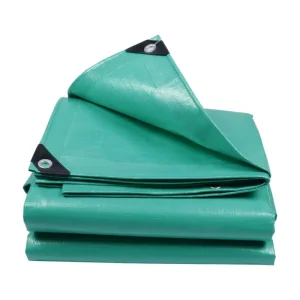
Custom engineered for resistance against extreme UV exposure, tropical downpours, and salt spray in Panama City, Colón, and David.
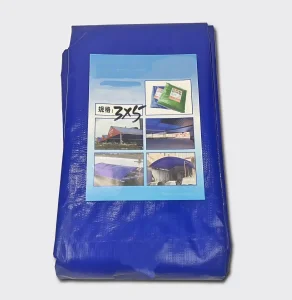
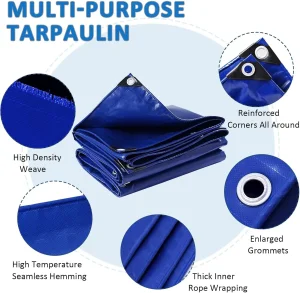
Panama occupies an unmatched position in global trade architecture. Anchored by the Panama Canal, the Colón Free Zone (Zona Libre de Colón - ZLFR), and transoceanic port terminals such as Balboa, Cristobal, and Manzanillo International Terminal (MIT), Panama functions as the primary logistics crossroads of the Western Hemisphere. Consequently, the regional market demand for industrial-grade protective coverings—specifically high-density polyethylene (PE) stripped tarpaulins, polypropylene (PP) woven fabrics, and heavy-duty polyvinyl chloride (PVC) coated membranes—is governed by stringent performance parameters.
Commercial enterprises, logistics consolidators, shipping lines, and civil engineering firms in Panama face distinct environmental and operational challenges:
Panama experiences a tropical maritime climate (Köppen classification Am/Af) with an intense rainy season spanning 8 to 9 months annually (May to December). Annual rainfall averages between 1,300 mm in Pacific coastal zones to over 3,000 mm along the Atlantic coastline. Protective covers require 100% hydrostatic water resistance (>150 kPa) to prevent cargo water damage.
Located close to the equator (8°N latitude), Panama receives relentless ultraviolet (UV) radiation year-round, with UV Index ratings frequently peaking above 11 (Extremely High). Standard untreated plastic sheets degrade, embrittle, and delaminate within weeks. Commercial tarpaulins must be fortified with advanced UV masterbatches (UV-326/UV-328 hindrance inhibitors).
Freight transiting between the Atlantic and Pacific oceans via the Panama Canal Railway, truck corridors, or open barge systems undergoes frequent mechanical handling, high wind drag, and marine salt spray. Stripped tarpaulins utilized for flatbed trailer covers and breakbulk cargo must possess high tensile, tear, and abrasion resistance.
The global industrial protective fabrics market is undergoing a structural shift driven by advanced polymer chemistry, automated weaving technology, and heightened supply chain reliability demands. Global enterprise buyers—ranging from Latin American distribution groups to multinational logistics operators—are transitioning away from low-tier, unlaminated covers toward high-performance co-extruded polymers.
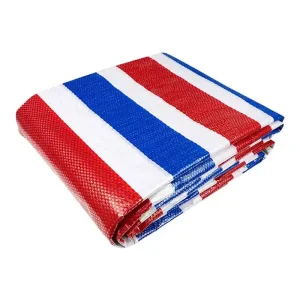
Modern PE stripped tarpaulins are manufactured using a three-layer co-extrusion architecture: a inner woven fabric core (scrim) crafted from high-density polyethylene (HDPE) tapes to provide mechanical tensile strength, laminated on both sides with low-density polyethylene (LDPE) films for absolute water impermeability. The integration of color-coded stripes (such as the classic Blue/Red/White pattern) serves both optical identification purposes for logistics management and heat-reflection functionality.
Furthermore, heavy-duty applications increasingly utilize PVC knife-coated or hot-laminated fabrics featuring high-denier polyester base yarns (e.g., 1000D x 1000D, 18x18 or 23x23 mesh count). These provide superior resistance to puncturing, chemical exposure, and flame propagation (complying with international standards like NFPA 701 and CPAI-84).
Key decision-makers in global procurement evaluate suppliers based on specific criteria that directly affect total cost of ownership (TCO):
| Polymer Category | Grammage Range (GSM) | Tensile Strength (Warp/Weft) | Hydrostatic Pressure | UV Lifespan (Panama Climate) | Primary Industrial Use Case |
|---|---|---|---|---|---|
| Stripped PE Tarpaulin | 80 - 180 GSM | 600 N / 500 N per 5cm | > 100 kPa | 12 - 24 Months (3% UV) | General Cargo, Temporary Shelter, Hardware Retail |
| Heavy-Duty PP Woven | 120 - 250 GSM | 850 N / 750 N per 5cm | > 120 kPa | 18 - 30 Months | Agriculture, Silage, Mining Stockpiles, Construction |
| PVC Coated Fabric | 450 - 900 GSM | 2500 N / 2200 N per 5cm | > 200 kPa | 36 - 60+ Months | Truck Side Curtains, Container Covers, Permanent Tents |
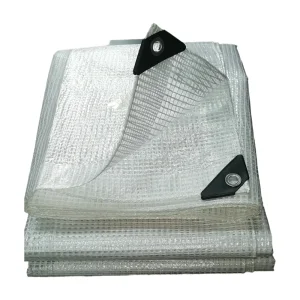
| PE Grid / Mesh Fabric | 100 - 220 GSM | 700 N / 650 N per 5cm | Permeable / Water-Resistant | 24 - 36 Months | Scaffolding Enclosures, Sun Shade Sails, Agriculture |
How Shandong’s advanced polymer manufacturing hub delivers unmatched cost-performance ratios, rapid production throughput, and custom OEM precision for Panamanian distributors.
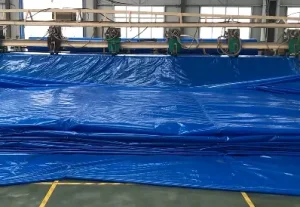
Our state-of-the-art manufacturing facility in Linyi, Shandong eliminates third-party outsourcing dependencies. By controlling the complete transformation process—from virgin Polyethylene/Polypropylene granule extrusion and high-speed tape stretching, to circular weaving, double-sided film lamination, automated cutting, hot-air seam sealing, and eyelet punching—we ensure absolute consistency in every batch.
This vertical integration allows exact customization of tensile strength, elongation ratios, coating thickness, color pattern formulations (including custom blue-red-white stripped configurations), and anti-aging additive recipes tailored specifically for Panama’s climate.
Every batch produced for export to Central America undergoes rigorous laboratory testing before container dispatch:
From maritime infrastructure to agricultural heartlands, our tarpaulins are specialized to solve specific sector problems across the Panamanian territory:
As Latin America’s largest free trade zone, Colón processes millions of tons of re-export merchandise. High-density stripped PE tarpaulins (120–160 GSM) are extensively utilized as temporary warehouse divider curtains, Pallet rain wraps, and outdoor staging covers to protect electronics, textiles, and consumer goods from sudden tropical downpours.
Breakbulk cargo, machinery, and containerized equipment waiting on open docks in Balboa, Cristobal, or Rodman Port face saltwater corrosion and intense heat. Our heavy-duty PVC coated tarpaulins (650+ GSM) and reinforced PE sheets provide heavy UV protection, salt-mist resistance, and flame retardancy for long-term ocean-side storage.
Major infrastructure developments—such as Metro Line 3, the Fourth Bridge over the Panama Canal, and road expansions—require robust site protection. High-visibility blue/orange construction tarpaulins and safety scaffolding mesh safeguard open excavations, curing concrete, and construction materials against heavy rainfall erosion.
In the agricultural hub of Chiriquí, Boquete, and Azuero Peninsula, protective covers are essential for coffee bean drying yards, livestock shades, vegetable greenhouses, and aquaculture pond liners. UV-stabilized PP woven fabrics and light-transmitting PE grid tarpaulins optimize climate control while preventing crop loss from excessive humidity.
As environmental regulations tighten globally and corporate sustainability goals become integral to procurement policies, the industrial tarpaulin sector is experiencing key technological shifts:
Traditional multi-material covers present recycling challenges at the end of their operational lifecycle. Next-generation tarpaulins utilize mono-material Polyethylene compositions (where the base scrim, lamination film, cord reinforcement, and grommets are all produced from pure PE). This enables seamless 100% circular recycling without material separation.
For PVC tarpaulins, traditional phthalate plasticizers are being superseded by non-phthalate, bio-based alternative plasticizers derived from renewable vegetable oils. This reduces volatile organic compound (VOC) emissions, satisfies REACH/RoHS compliance, and provides enhanced cold-crack flexibility.
Incorporating Titanium Dioxide (TiO2) nano-coatings on exterior tarpaulin surfaces yields self-cleaning properties via photo-catalysis while boosting solar reflectance index (SRI). This drastically reduces heat buildup under warehouse shelters and vehicle covers in sun-drenched regions like Panama.
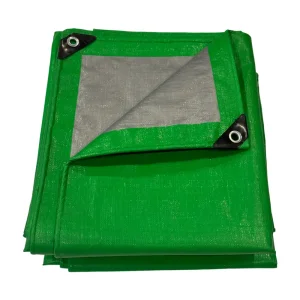
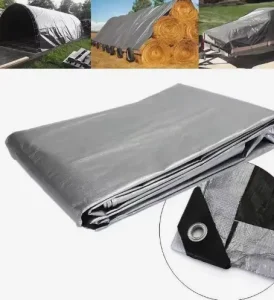
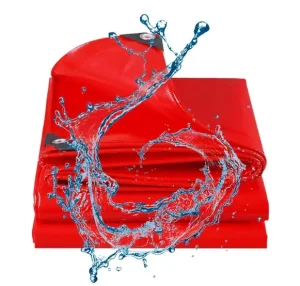
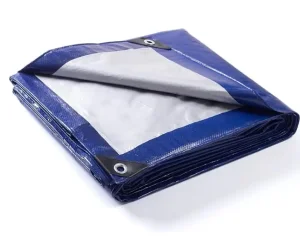
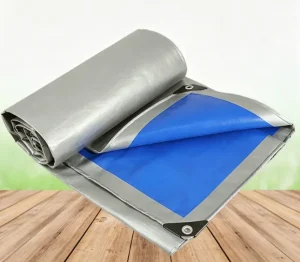
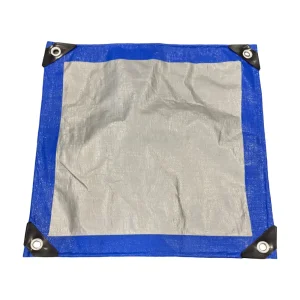
Select from our standard running export specifications or request custom GSM, color ways, eyelet pitch, and OEM branding package designs.
Direct technical and commercial answers designed for Panamanian wholesalers, freight forwarders, and industrial buyers.
Partner directly with China's leading tarpaulin manufacturer. Get custom pricing, container loading calculations, and material samples dispatched to Panama within 3 business days.
Send Inquiry Now