Direct factory-extruded virgin HDPE woven fabric coated with dual LDPE film. Engineered for global logistics, construction scaffolds, and agricultural covers.
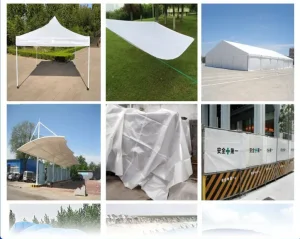
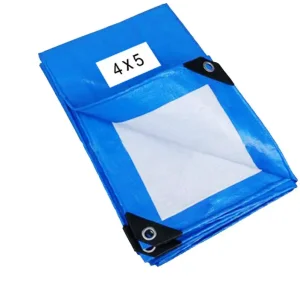
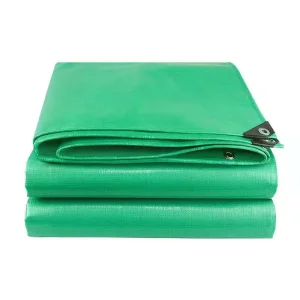
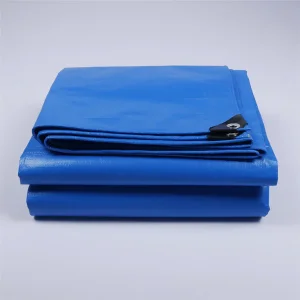
In the contemporary globalized industrial landscape, the demand for high-durability, cost-effective, and climate-resilient containment materials has driven unprecedented growth in the manufacture of Polyethylene (PE) Tarpaulin Rolls. Engineered from woven High-Density Polyethylene (HDPE) tape cores encapsulated by low-density polyethylene (LDPE) lamination on both surfaces, PE tarpaulin rolls represent a fundamental material class serving cross-border supply chains, megacity infrastructure, agricultural stockpiling, and emergency humanitarian relief.
As global enterprise procurement teams transition away from legacy, plasticizer-heavy materials like un-recyclable PVC coated canvases due to chemical restrictions (such as REACH and RoHS compliance) and high tare-weight freight penalties, China Polyethylene Tarpaulin Roll Suppliers & Factories have stepped up to bridge the technology gap. By leveraging advanced co-extrusion technology, UV-stabilizer masterbatching, and high-speed water-jet weaving looms, Chinese manufacturers offer superior strength-to-weight ratios, operational longevity, and complete circular recyclability.
Enterprise buyers operating across North America, the European Union, the Middle East, Africa, and Southeast Asia evaluate tarpaulin roll suppliers through rigorous multi-variable auditing frameworks. Buying decisions are no longer anchored solely on spot price per metric ton, but on technical specifications, batch consistency, and long-term risk mitigation.
Industrial buyers require strict adherence to ASTM D751 and ISO 1421 standards. High warp/weft tensile strength prevents tearing under wind loads during transit or scaffold suspension.
High solar radiation zones (e.g., GCC countries, Australia, Sub-Saharan Africa) demand 3% to 5% Hindered Amine Light Stabilizers (HALS) masterbatch integration to prevent polymer photo-degradation.
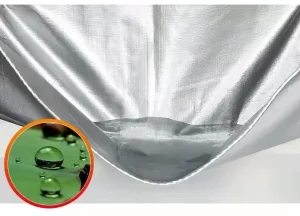
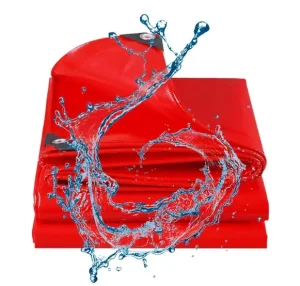
To ensure 100% waterproof performance under heavy downpours, dual-sided LDPE lamination must withstand water columns up to 10,000mm H2O without pinhole seepage.
| Property Parameter | Light Duty Grade | Standard Commercial Grade | Heavy-Duty Industrial Grade | Testing Method |
|---|---|---|---|---|
| Grammage Weight (GSM) | 60 g/m² – 90 g/m² | 100 g/m² – 160 g/m² | 180 g/m² – 300 g/m² | ISO 3801 / ASTM D3776 |
| Weave Mesh Count (inch) | 7×7 / 8×8 | 10×10 / 12×12 | 14×14 / 16×16 | ASTM D3775 |
| Yarn Denier (D) | 500D – 750D | 800D – 1000D | 1100D – 1500D | ISO 2060 |
| Tensile Strength (Warp/Weft) | 450 / 400 N/5cm | 750 / 700 N/5cm | 1400 / 1300 N/5cm | ISO 13934-1 / ASTM D751 |
| Tear Resistance (Elmendorf) | 45 N | 85 N | 160 N | ISO 13937-1 |
| Temperature Resistance | -20°C to +70°C | -30°C to +80°C | -40°C to +85°C (Cold Crack Resistant) | EN 1876-1 |
China’s dominant position in the manufacturing of PE tarpaulin rolls is spearheaded by specialized industrial hubs such as Linyi in Shandong Province. Modern manufacturing complexes—exemplified by Linyi Xinshengyang Plastic Products Co., Ltd. (Star Tarpaulins)—have integrated the entire production lifecycle within single 30,000 m² facilities. This end-to-end integration delivers unmatched quality control and cost efficiencies across every stage:
Using 100% virgin High-Density Polyethylene (HDPE) resins combined with color masterbatch and UV inhibitors, continuous flat-tape extrusion lines achieve precise micron-level thickness and uniform denier distribution, mitigating weak points in downstream weaving.
Circular looms and water-jet weaving machines operate continuously to generate tight mesh densities ranging from 7×7 up to 16×16 threads per square inch, creating a structural fabric core with extreme dimensional stability.
Heated extrusion coaters apply molten Low-Density Polyethylene (LDPE) onto both sides of the woven substrate simultaneously. This heat-bonding technique eliminates delamination risks even under extreme mechanical flexure.
From roll slitting and web-guide edge alignment to heat-seal hemming, rope insertion, and automatic eyelet punching, automated processing lines eliminate human assembly variances across annual outputs exceeding 20,000 metric tons.
Heavy-duty cargo transportation demands tarpaulin covers capable of enduring continuous dynamic air turbulence and weather shifts. High-GSM PE tarpaulin rolls are fabricated into custom trailer covers, side curtains, and flatbed tarps. Triple-coated, sun-resistant white PE tarps reflect infrared heat to reduce cargo box thermal buildup, safeguarding food, chemicals, and manufactured goods.
Agricultural operations rely on wide-width PE tarpaulin rolls (up to 6 meters continuous width without seams) to create grain drying sheets, silage fermentation covers, and hay stack shields. In aquaculture, high-density, non-toxic virgin PE liners are utilized for pond containment, farm reservoir lining, and layflat irrigation delivery systems.
On multi-story construction sites, blue/orange flame-retardant scaffold wraps protect workers from extreme wind shear while containing debris. Flame-retardant (FR) additives meeting NFPA 701 and DIN 4102 B1 standards are compounded into the polyethylene lamination layer to prevent ignition from welding sparks.
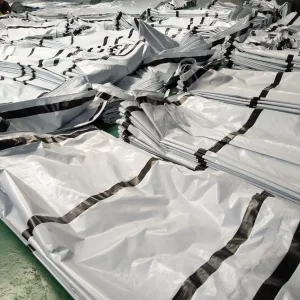
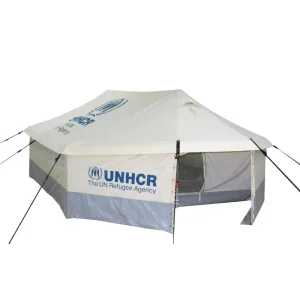
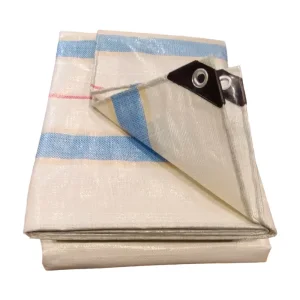
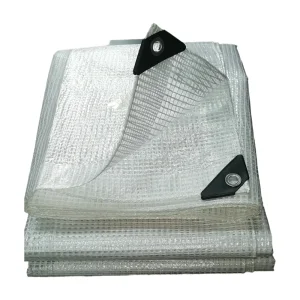
Working alongside global aid institutions (UNHCR, Red Cross), factory-direct suppliers produce standardized white/grey emergency shelter tarps. Reinforced with black webbed corners, UV stabilization for 2+ years of tropical exposure, and integrated grommets, these tarpaulins form the primary building envelope for rapid displacement shelters.
Explore custom rolls, shade grid structures, PP heavy-duty covers, and specialized PVC/PE coated options manufactured for global distribution.
When evaluating bulk procurement from Chinese tarpaulin suppliers, enterprise procurement directors must calculate Total Cost of Ownership (TCO) rather than focusing solely on initial FOB roll pricing. Shipping air volume, core weight variations, and palletization efficiencies significantly dictate landed cost structure.
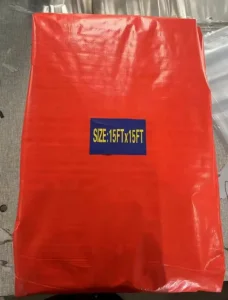
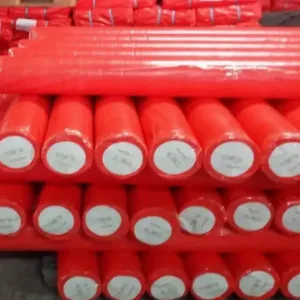
By utilizing hydraulic core-pressing and roll compacting technology, master tarpaulin rolls are wound under continuous tension. This increases container volumetric loading efficiency by 15% to 22%, maximizing freight tonnage inside standard 40ft HQ containers.
Direct factory integration enables customized edge printing, flexographic logo stamping, localized barcode insertion, and automated retail display sleeve wrapping, streamlining immediate distribution into big-box retail channels.
Enterprise orders are accompanied by comprehensive quality assurance records: SGS batch inspection reports, BV material analysis, REACH compliance certificates, Form E/Form A certificates of origin, and certified lab tensile test sheets.
Selection depends on application severity and field lifespan requirements:
Polyethylene (PE): Lightweight, highly flexible in cold climates (-40°C), 100% recyclable mono-material polyolefin, and highly cost-effective per square meter.
Polypropylene (PP): Features higher stiffness and tensile yield than PE at similar weights, but slightly lower UV cold-crack resistance.
Polyvinyl Chloride (PVC): Very heavy (450–900 GSM), exceptionally durable rubber-like feel, but higher cost, non-recyclable in standard streams, and prone to plasticizer leaching over time.
UV protection is not a post-spray coating; it is chemically integrated into the polymer matrix during tape extrusion. Factories compound 3% to 5% Hindered Amine Light Stabilizers (HALS) masterbatch into the virgin HDPE melt. This chemical additive neutralizes free radicals created by ultraviolet radiation, extending outdoor field life to 2–5 years depending on global solar irradiance zones.
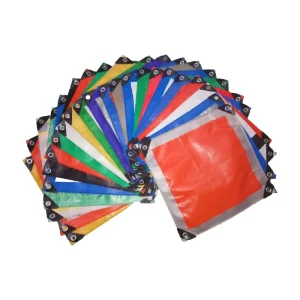
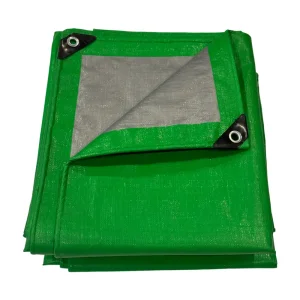
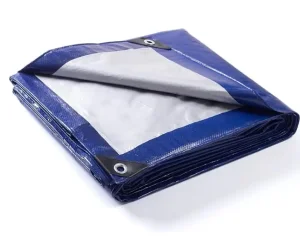
For standard stock color roll specifications (e.g., Blue/Silver, Green/Silver, Blue/Orange), factory MOQs start at 3 metric tons per specification or a mixed 20ft container (approx. 11-13 tons). Custom colors, non-standard roll widths, special flame retardants, or custom printed branding require 5 metric tons per specification. Standard production lead times range between 15 and 25 calendar days following pre-production sample approval.
Yes. Specialized high-capacity co-extrusion and wide-loom weaving plants produce seamless rolls in widths up to 2 meters, 4 meters, and 6 meters. For finished tarpaulin sheets exceeding these widths, heavy-duty high-frequency thermal welding machines fuse panels together with a 100% waterproof double-seam weld that exceeds parent fabric tensile strength.