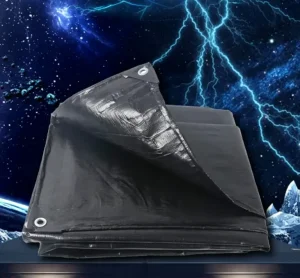
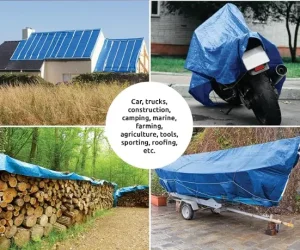
Engineered for extreme tensile resilience, hydrostatic resistance, and prolonged UV endurance across global industrial markets.
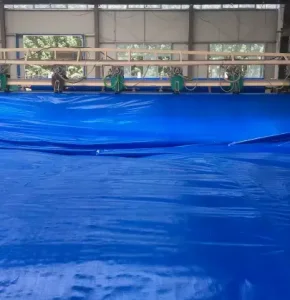
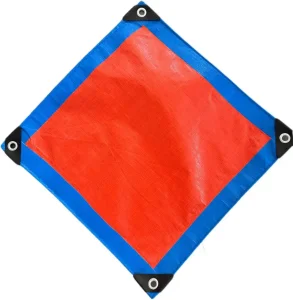
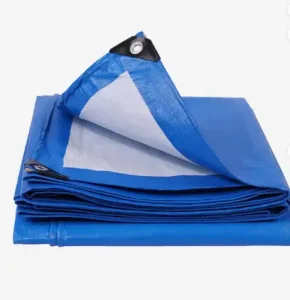
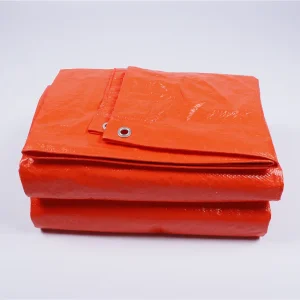
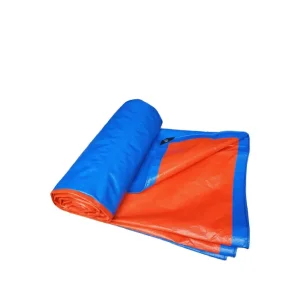
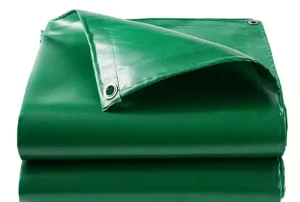
In the contemporary industrial supply landscape, enterprise procurement officers and global distributors face unprecedented volatility in material acquisition, environmental compliance pressures, and stringent operational performance requirements. As weather patterns become more severe and supply chains demand total traceability, the traditional multi-tiered distribution model for polymer textiles is rapidly collapsing in favor of direct manufacturer integrations. Sourcing directly from an established wholesale factory manufacturer & factories ecosystem—such as Linyi Xinshengyang Plastic Products Co., Ltd. (operating globally as Star Tarpaulins)—provides non-negotiable strategic advantages in structural quality control, cost predictability, and technical adaptability.
Historically viewed as basic commodities, industrial tarpaulins made from Polyethylene (PE), Polypropylene (PP), and Polyvinyl Chloride (PVC) have evolved into precision-engineered technical textiles. Modern applications demand sophisticated formulas capable of enduring extreme thermal variances, intense ultraviolet irradiation, mechanical abrasion, and chemically corrosive environments. Consequently, global enterprise buyers are moving beyond superficial price-per-square-meter comparisons. Sourcing decisions are now calculated using Total Cost of Ownership (TCO) matrices, where tensile retention over time, seam shear strength, UV stabilizer half-life, and environmental regulatory compliance dictate long-term procurement ROI.
Unpacking the extrusion, weaving, and coating methodologies behind high-performance PE, PP, and PVC industrial fabrics.
High-Density Polyethylene (HDPE) forms the primary structural core of heavy-duty woven tarpaulins. Pure virgin resin is processed through high-precision extruders, where molten polymer is slit into narrow ribbons and molecularly oriented through heat-stretching. This biaxial molecular alignment dramatically enhances tensile modulus and tear propagation resistance compared to recycled polymer blends.
Utilizing state-of-the-art circular looms, the drawn HDPE tape is woven into structural mesh densities ranging from 8×8 to 14×14 picks per inch. Controlled tension dynamics prevent localized tape twisting, ensuring uniform load distribution across both warp and weft vectors. This physical foundation determines the ultimate burst pressure and resistance to wind shear.
To achieve 100% hydrostatic impermeability, woven mesh substrates pass through high-speed double-sided Low-Density Polyethylene (LDPE) lamination lines. Liquid polymer is fused directly onto the woven matrix under extreme hydraulic pressure, locking the yarns in place while creating an impenetrable fluid and moisture barrier.
Unprotected polyolefins degrade rapidly under solar UV radiation through photo-oxidation. Ultraviolet photons break the carbon-carbon bonds within the polymer backbone, leading to embrittlement, discoloration, loss of tensile strength, and eventual structural disintegration. To counter this degradation, Star Tarpaulins integrates custom Hindered Amine Light Stabilizers (HALS) combined with specialized UV absorbers (such as Benzotriazoles and Carbon Black pigments) during the initial masterbatch extrusion process.
For demanding geographic deployment—such as the Middle East, Equatorial Africa, and Australia—UV masterbatch dosages are adjusted to 3%–5% by weight. This formulation acts as a sacrificial free-radical scavenger, neutralizing the peroxide radicals formed during solar exposure. Accelerated weathering testing in accordance with ASTM G154 demonstrates that our high-tier tarpaulin formulations maintain over 80% of original tensile capacity after 3,000 hours of continuous QUV exposure.
Standardizing material choices according to functional lifecycle requirements, climatic exposure, and structural loading metrics.
| Tarpaulin Category | Grammage Range (GSM) | Core Composition | Tensile Strength (Warp/Weft) | Primary Industrial Applications |
|---|---|---|---|---|
| Economy Utility PE | 60 – 90 GSM | HDPE Woven / LDPE Film | 450 / 400 N/5cm | Light machinery covers, short-term dust barriers, retail promotional tarps. |
| Standard Commercial | 100 – 160 GSM | Virgin HDPE / Dual LDPE | 750 / 700 N/5cm | Scaffolding enclosures, short-term grain drying, general cargo protection. |
| Heavy-Duty Industrial | 180 – 300 GSM | High-Denier HDPE / Reinforced LDPE | 1200 / 1100 N/5cm | Construction site weather shielding, long-term hay covers, marine freight tarps. |
| PVC Knife-Coated Tech | 450 – 900 GSM | High-Tenacity Polyester / Coated PVC | 2500 / 2300 N/5cm | Commercial truck side curtains, permanent architectural tents, containment booms. |
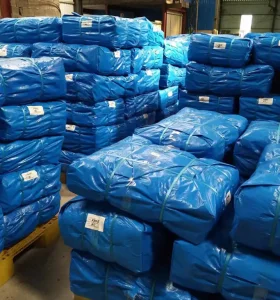
A crucial factor frequently overlooked in global sourcing calculations is volumetric freight optimization. Operating directly from our integrated factory allows custom baling and high-density carton packing tailored to standard 20ft, 40ft, and 40ft High Cube (HQ) container dimensions. By optimizing rolling tension, edge trim width, and automated hydraulic pressing during the packaging stage, Star Tarpaulins increases volumetric loading efficiency by up to 15% compared to non-standardized packing methods. This drastically lowers landed transport costs per square meter, yielding immediate margin improvements for wholesale buyers.
Tailored engineering configurations meeting the strict performance demands of global industries.
Post-harvest grain loss represents a multi-billion-dollar global challenge. Our specialized grain-drying tarpaulins and silage covers incorporate food-grade compliant virgin polyolefins with high thermal reflection properties. The dual-color silver/black and brown double-faced formulations actively reduce internal heat accumulation while shielding harvests from moisture penetration, mold spores, and unexpected rainfall.
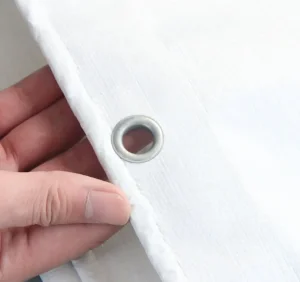
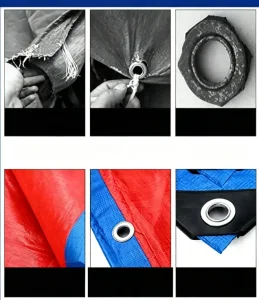
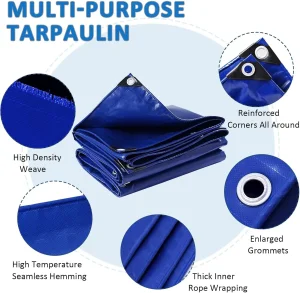
Long-haul highway transport exposes cargo covers to continuous aerodynamic drag, flapping stress, and dynamic tear loads. Our truck covers and PVC side curtains feature reinforced perimeter hems embedded with high-tensile polypropylene rope, welded ultrasonic seams, and drop-forged brass grommets positioned at stress-calculated intervals to prevent eyelet pull-out under extreme force.
In structural civil engineering, maintaining controlled moisture levels during concrete hydration is essential to achieving maximum compressive strength. Our insulated concrete curing blankets combine PE woven sheet layers with closed-cell foam cores, preventing rapid moisture loss and thermal shock during freeze-thaw cycles on massive infrastructure projects.
Operating a vertical production ecosystem across a 30,000 square meter plant in Wanggou Industrial Park, Lanshan District, Linyi City, allows Star Tarpaulins to enforce strict Quality Assurance (QA) and Quality Control (QC) standards at every production stage. Quality is built into the workflow rather than merely checked at the end:
Enterprise clients sourcing for European, North American, and Australasian markets must satisfy stringent environmental directives. Our PE, PP, and PVC lines are manufactured in compliance with EU REACH regulations (EC 1907/2006), ensuring the complete absence of banned heavy metals, polycyclic aromatic hydrocarbons (PAHs), and restricted phthalate plasticizers. Fire-retardant options are engineered to meet international flame propagation criteria, including NFPA 701, DIN 4102-1 B1, and EN 13501-1 standards.
Pioneering sustainable polymer developments, smart technical textiles, and advanced automation in tarpaulin manufacturing.
Driven by global sustainability mandates, our R&D division is accelerating the integration of Post-Consumer Recycled (PCR) polyolefins without compromising mechanical performance. By utilizing multi-layer co-extrusion technology, recycled materials are encapsulated within virgin resin outer skins, maintaining weatherability while reducing carbon footprint.
Next-generation industrial tarpaulins will incorporate printed conductive tracks and passive RFID/IoT micro-sensors. These advances allow real-time monitoring of cargo moisture, tension integrity, and atmospheric temperature changes on long-distance multimodal logistics routes.
Transitioning from traditional hot-air thermal welding to high-frequency ultrasonic bonding eliminates thermal distortion, produces invisible liquid-tight seams, and increases corner tear resistance by up to 25% under extreme tension.
Clear, direct answers to common procurement questions for importers, procurement engineers, and bulk buyers.
Explore our complete range of waterproof PE/PP/PVC tarpaulin sheets, rolls, and specialized covers.