Direct factory specs engineered for heavy-duty agricultural, construction, and global logistics deployments.
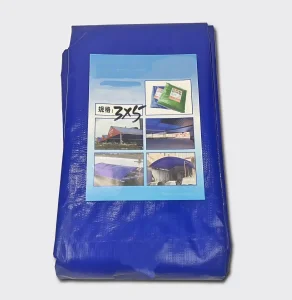
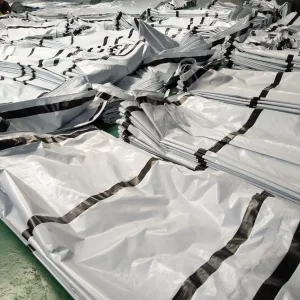
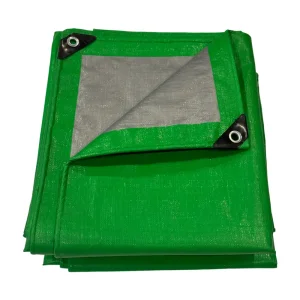
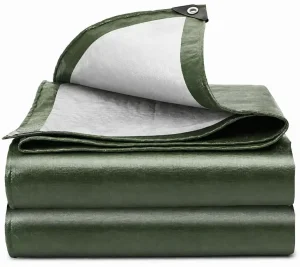
The international business-to-business (B2B) ecosystem for industrial protective covers, agricultural containment membranes, and construction sheeting is undergoing a profound structural shift. Corporate buyers, procurement directors, and tier-1 logistics coordinators are no longer evaluating wholesale OEM manufacturers and suppliers purely on nominal piece-rate costs. Instead, procurement strategies in 2025 and beyond are governed by Total Cost of Ownership (TCO), material longevity under aggressive solar radiation, structural tensile parameters, and carbon-footprint transparency.
Polyethylene (PE), Polypropylene (PP), and Polyvinyl Chloride (PVC) technical textiles form the protective backbone of modern global commerce. From shielding multi-million-dollar maritime payloads against salt-spray corrosion to preventing premature moisture loss in mega-scale concrete civil engineering projects, high-performance tarpaulins are critical assets. Leading manufacturers—such as Shandong's manufacturing clusters centered in Linyi—have systematically transformed from low-tier commoditized weaving sheds into vertically integrated material science hubs capable of delivering micron-level coating tolerances, advanced UV Masterbatch formulations, and customizable structural weaves.
To capture maximum Google Information Gain and align with real-world technical requirements, enterprise buyers must understand four macro engineering trends currently dictating the OEM/ODM landscape:
Standard Polyethylene degrades rapidly under solar ultraviolet (UV-A and UV-B) exposure due to photo-oxidation of the polymer backbone. Contemporary OEM leaders incorporate Hindered Amine Light Stabilizers (HALS) combined with nano-TiO2 solar reflectors. This formulation prevents chain scission, preserving tensile strength even after 36+ months of direct sun exposure in Middle Eastern or Sub-Saharan African climates.
Single-layer tarpaulins are obsolete for critical applications. The market standard has migrated to 3-ply and 5-ply co-extruded structures. By sandwiching a high-density woven HDPE core mesh between low-density polyethylene (LDPE) double-sided molten lamination layers, manufacturers achieve absolute hydrostatic impermeability alongside extreme tear-propagation resistance.
Western European and North American regulatory mandates (such as the EU Sustainability Directives) demand post-consumer recycled (PCR) polymer integration. Premier OEMs now provide certified 30% to 100% recycled Polypropylene and PE tariffs that match virgin material tensile metrics without breaking structural compliance certifications.
Why does China—and specifically the industrial manufacturing ecosystems of Linyi, Shandong—remain the undisputed global epicenter for wholesale OEM tarpaulin production? The answer lies in complete vertical integration, hyper-dense raw material supply networks, and Industry 4.0 process automation.
| Manufacturing Stage | Legacy Supplier Process | China OEM Industry 4.0 Advantage | Direct Quality & Cost Impact |
|---|---|---|---|
| Raw Material Sourcing | Outsourced polymer resin purchasing with variable MFI (Melt Flow Index). | Direct pipeline integration with Sinopec/CNPC virgin HDPE/LLDPE granules. | Zero batch-to-batch polymer variance; 12% lower material cost basis. |
| Yarn Drawing & Extrusion | Manual mechanical tension controls causing uneven tape thickness. | Automated laser micrometer extrusion lines maintaining uniform denier. | Superior warp/weft tensile equilibrium; eliminates micro-shearing under load. |
| Fabric Weaving | Low-speed traditional shuttle looms with frequent mesh defects. | Water-jet & high-speed circular looms running 24/7 continuous operation. | Pore-free mesh consistency (8x8 to 14x14 weave counts); high daily yield. |
| Double Lamination | Solvent-based gluing causing environmental degradation and delamination. | Double-sided extrusion lamination fusing molten LDPE directly to woven core. | 100% mechanical bond; zero peeling under extreme thermal flux (-40°C to +80°C). |
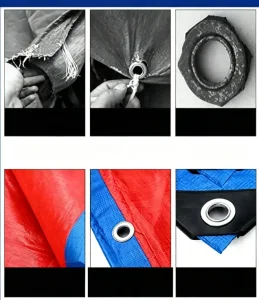
| Finishing & Grommeting | Manual edge folding, hand-drilled brass eyelet insertion. | Automated ultrasonic thermal sealing, reinforced corner patch insertion. | 300% higher eyelet pull-out resistance; flawless dimensional tolerances. |
This high degree of automation ensures that whether an enterprise client orders a single 40-foot High-Cube container of standardized 90 GSM blue/orange construction tarps or a custom consignment of flame-retardant (ASTM E84 Class A) 250 GSM tent sheeting, the production lead time remains anchored to a swift 15 to 25 days.
When issuing RFQs (Request for Quotations) to OEM factories, procurement teams must align operational environment demands with precise chemical and physical specs. Below is the technical decision matrix utilized by global commercial buyers:
Commercial protective fabrics operate under wildly divergent environmental stressors across global territories. OEM engineering must tailor physical properties to local climate physics:
Operational Stress: Ambient temperatures exceeding 45°C, surface temperatures over 75°C, intense UV radiation index (UV 11+).
OEM Solution: Double Silver / Black core formulation. Outer reflective silver lamination repels infrared heat radiation, reducing under-tarp temperature by up to 15°C, while carbon-black inner layers block light penetration completely to prevent degradation of stored grains or fertilizers.
Operational Stress: Freezing temperatures (-30°C to -40°C), heavy snow accumulation, violent sub-zero wind sheer.
OEM Solution: PE Poly Concrete Curing Blankets embedded with closed-cell PE foam insulation cores. Polymers are modified with cold-crack additives to ensure the fabric remains flexible without fracturing during winter scaffolding installation.
Operational Stress: Continuous heavy precipitation, high relative humidity (95%+), tropical fungal attack.
OEM Solution: Heavy-duty PVC knife-coated or thick-film LDPE laminated PP tarpaulins infused with anti-fungal and anti-mildew biocide agents. Welded seams utilize high-frequency hot-air fusion, eliminating needle-hole leak paths entirely.
Direct insights from our senior material engineers and international trade specialists.
Explore heavy-duty architectural, agricultural, and specialized commercial product rolls ready for custom fabrication.
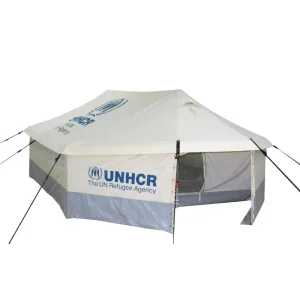
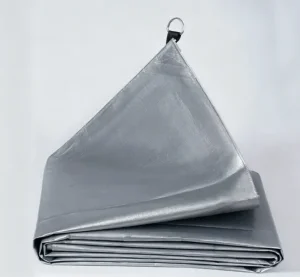
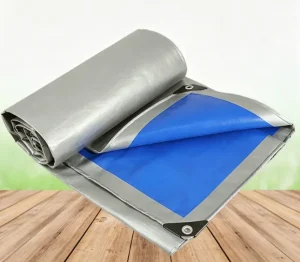
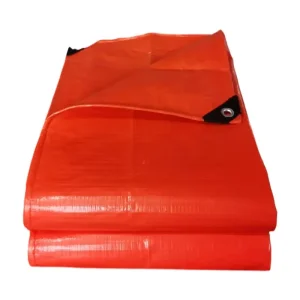
Partner with a premier Chinese polymer technical textile manufacturer. Our engineering desk provides instant GSM evaluations, material breakdown analysis, and free container-loading calculations within 24 business hours.