An authoritative analysis of polymer extrusion technologies, vertically integrated manufacturing economics, and procurement optimization for high-volume international buyers.
In the global industrial fabric and protective covering marketplace, Polyethylene (PE) Tarpaulins represent the gold standard for scalable, lightweight, and cost-effective environmental shielding. As enterprise procurement directors, commercial distributors, and OEM brands navigate volatile supply chains, partnering directly with fully integrated China PE Tarpaulin Manufacturers has shifted from a pure cost-saving tactic to a core strategic imperative. Modern industrial PE tarpaulin production demands extreme precision across chemical formulation, mechanical weaving, thermal lamination, and automated fabrication.
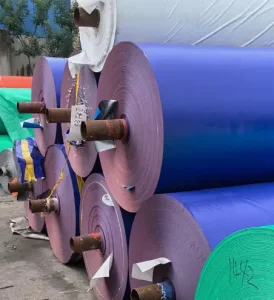
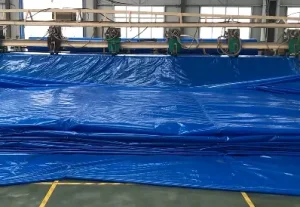
Centered in Shandong Province—the world's densest cluster for industrial polymer processing—Linyi manufacturing hubs leverage an unparalleled supply chain matrix. Vertically integrated factories control every link of the value chain: from upstream petrochemical monomer procurement (such as Sinopec and PetroChina virgin granules) to high-speed flat yarn extrusion, circular loom weaving, double-sided water-resistant lamination, automatic high-frequency heat welding, aluminum/brass eyelet punching, and custom retail packaging.
Direct access to raw petrochemical refineries minimizes material transport premiums. High-volume continuous production lines run 24/7, yielding unmatched economies of scale that translate into 15–25% operational savings for bulk OEM orders.
Unlike regional assemblers, Tier-1 Chinese factories alter polymer chemistry at the molecular level—incorporating anti-aging agents, Hindered Amine Light Stabilizers (HALS), flame retardants, and custom color pigments directly during yarn extrusion.
Proximity to Qingdao and Port of Lianyungang provides seamless multi-modal shipping. Optimized container loading protocols (bale pressing, roll packing, and Palletized Crating) maximize volume utilization and slash ocean freight per metric ton.
Technical breakdown of material structural integrity, weave density calculations, hydrostatic head thresholds, and climate degradation resistance.
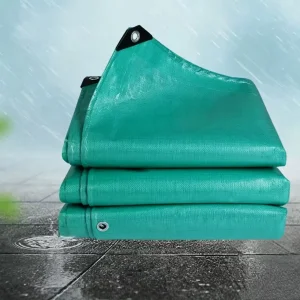
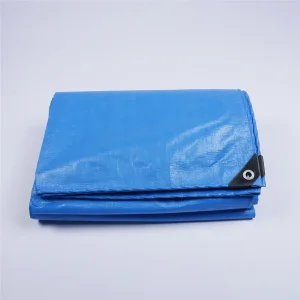
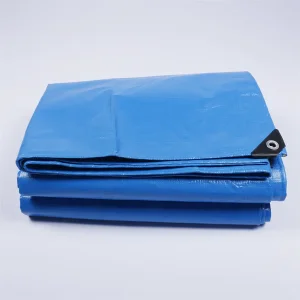
To write an airtight procurement specification, buyers must understand the mechanical physics of Polyethylene synthetic fabrics. A finished poly tarp is a composite structure: an inner woven scrim of High-Density Polyethylene (HDPE) tapes provides tensile, burst, and tear resistance, while outer lamination coatings of Low-Density Polyethylene (LDPE) deliver 100% moisture impermeability and surface protection.
| Performance Standard | Light-Duty OEM Specification | Medium-Heavy Duty Specification | Industrial Heavy Duty (Rubb Hall / Truck) |
|---|---|---|---|
| Weight Range (GSM) | 55 GSM – 90 GSM | 100 GSM – 180 GSM | 200 GSM – 350+ GSM |
| Mesh Weave Density | 8×8 to 10×10 mesh/sq.inch | 10×10 to 12×12 mesh/sq.inch | 14×14 to 16×16 high-density mesh |
| Yarn Denier (dtex) | 600D – 800D HDPE Yarn | 900D – 1100D HDPE Yarn | 1200D – 1500D High-Tenacity Yarn |
| Tensile Strength (ASTM D751) | Warp: 450 N / Weft: 400 N | Warp: 850 N / Weft: 780 N | Warp: 1600 N / Weft: 1450 N |
| Hydrostatic Head Resistance | > 8,000 mm H2O | > 15,000 mm H2O | > 30,000 mm H2O (Impermeable) |
| UV Protection Rating | 1% UV Masterbatch (6-12 mos) | 3% UV Stabilized (18-24 mos) | 5% HALS Additive (3-5 Years Life) |
Tailoring physical properties, branding execution, and dimensional geometries for global distributors and industrial end-users.
We produce cut-to-size ready-made sheets ranging from compact 2m × 3m retail packs to massive 30m × 50m agricultural covers. Continuous industrial tarp rolls are available from 1.83m up to 6m seamlessly without hot welds.
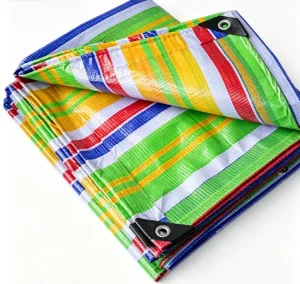
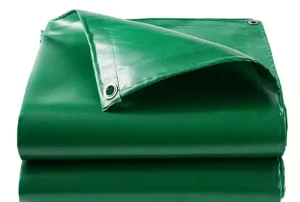
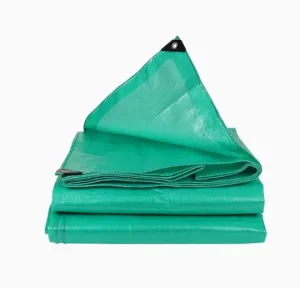
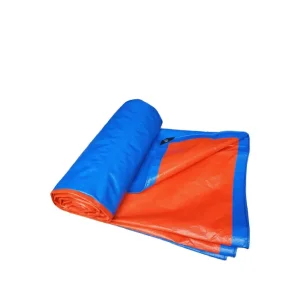
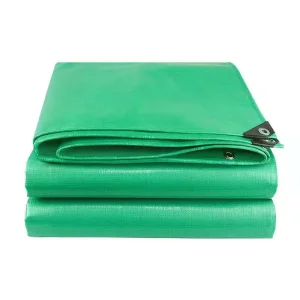
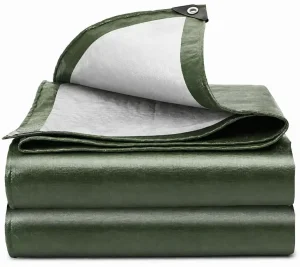
Dual-color co-extrusion technology enables specialized thermal management. Blue/Orange, Green/Silver, Black/Silver, Camouflage, White blackout, and clear transparent grid patterns can be produced to exact Pantone color match.
Configure grommet hardware according to environmental strain: rust-proof Aluminum eyelets, heavy-duty solid Brass, Stainless Steel 316, or heavy-duty molded Polycarbonate plastic eyelets positioned at 50cm, 100cm, or customized intervals.
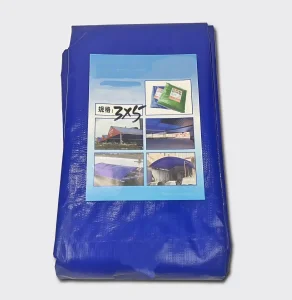
Complete retail-ready packaging solutions: high-resolution 4-color flexographic printing directly on tarps, custom polybags with color display inserts, barcode labelling, inner cardboard tubes, and display carton packaging for hardware chains.
Understanding shifting macro dynamics: sustainability mandates, disaster preparedness, and smart logistics driving tarpaulin consumption.
The global technical textile market is undergoing rapid evolution. Key drivers include stringent environmental regulations in North America and Western Europe, accelerating infrastructure investments across Southeast Asia, and escalating climate volatility requiring immediate emergency shelter deployment.
Unlike PVC tarpaulins which contain phthalate plasticizers and are extremely difficult to recycle, Polyethylene tarpaulins are 100% recyclable mono-material polyolefins. European and North American enterprise buyers are aggressively replacing PVC with heavy-duty PE to meet ESG mandates and circular economy goals.
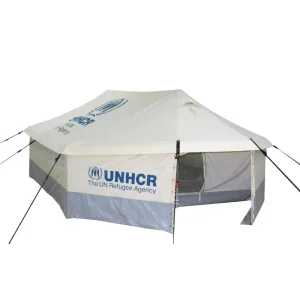
International aid agencies (UNHCR, Red Cross, IOM) maintain continuous stockpiles of standardized family shelter relief sheets. Factory compliance requires rigorous adherence to WHO flame-retardancy (CPAI-84), non-toxic chemical limits, and extreme temperature stability (-40°C to +80°C).
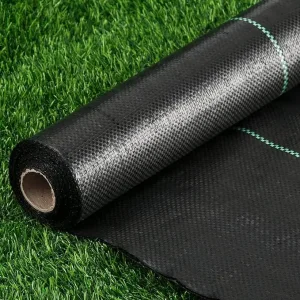
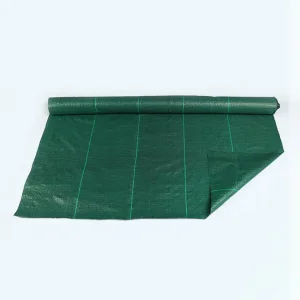
Modern climate-smart agriculture relies heavily on woven PE fabric for moisture retention, weed control ground cover, grain-drying pads, and temporary grain bunker storage. The integration of infrared-reflecting thermal coatings helps prevent crop spoilage caused by heat stress.
Engineered performance across diverse climate zones, extreme weather environments, and commercial industries.
In northern US and Canadian winter months, heavy-duty 200+ GSM blue/white flame-retardant scaffolding enclosures protect workers and curing concrete from sub-zero winds. Fast-response roof emergency tarpaulins provide temporary sealing against hurricane damage.
In high-UV environments like Saudi Arabia and the UAE, standard poly tarps degrade within weeks due to photo-oxidation. Our high-dosage HALS UV masterbatch tarps are specifically engineered to withstand over 350 KLY (Kilo-Langleys) of annual solar radiation, protecting machinery and grain stockpiles in ambient temperatures exceeding 50°C.
During monsoon seasons across Vietnam, Indonesia, and the Philippines, 100% waterproof double-coated 180 GSM green/silver tarps secure commercial cargo on open-deck trucks and barges. Black high-density woven sheets are deployed as heavy-duty pond liners for shrimp and tilapia farming.
Ensuring seamless import clearance, chemical safety certification, and regional market compliance.
Navigating international trade barriers requires absolute chemical and structural transparency. Tier-1 China factories provide full documentation packages to streamline customs clearance and ensure product compliance in buyer destination countries.
Products undergo third-party laboratory verification (SGS, Intertek, TÜV Rheinland) ensuring compliance with EU REACH Regulation (EC) No 1907/2006, SVHC substance checks, California Proposition 65 heavy metal limits, and RoHS directives.
Correct classification under HS Code 3926.90 (Articles of Plastics) or HS Code 6306.12 (Tarpaulins, awnings, sunblinds of synthetic fibers) is essential. Our dedicated trade compliance team assists in optimizing duty structures via Form E (ASEAN-China FTA), Form F, and RCEP Certificates of Origin.
We provide complete flexibility across Incoterms: FOB Qingdao, CFR, CIF, and full DDP (Delivered Duty Paid) door-to-door logistics directly to buyer distribution centers throughout North America, Europe, Australia, and the Middle East.
Expert answers to common procurement questions regarding minimum order quantities, testing procedures, production lead times, and custom specifications.
Selecting the right GSM (Grams per Square Meter) depends on expected mechanical strain and exposure duration:
Cut Size refers to the raw sheet dimensions before perimeter folding and edge hemming. Finished Size is the exact dimensions of the tarpaulin after the edges have been folded around the inner PP reinforcing rope and heat-sealed. As a standard industry practice, the finished size is typically 3% to 5% smaller (or approximately 4 inches to 6 inches shorter on each side) than the cut size unless specified as "Exact Finished Size" during OEM contract setup.
Polyethylene is naturally susceptible to UV degradation when exposed to solar radiation. We incorporate specialized Hindered Amine Light Stabilizers (HALS) and Carbon Black UV masterbatch during the high-density yarn extrusion process. For standard export tarps, we add 1% to 2% UV masterbatch. For extreme UV environments (Middle East, Australia, West Africa), we increase the dosage to 3% – 5% by weight, guaranteeing a functional service life of 2 to 5 years under outdoor solar exposure.
For custom OEM orders (specific color combinations, printed retail packaging, custom sizes), our standard MOQ is 3 to 5 Metric Tons per specification, or one 20-foot full container load (approx. 11-13 tons depending on packing density). Standard factory samples are dispatched free of charge within 48 hours; custom physical pre-production samples require 5 to 7 working days.
While PVC tarpaulins offer heavy weight, PE tarpaulins provide critical strategic benefits:
Every production lot undergoes strict internal Quality Control (QC) under ISO 9001 guidelines: 1) Grammage (GSM) verification across 5 points per roll; 2) Tensile and Tear strength testing (ASTM D751); 3) Hydrostatic pressure head testing to verify waterproof integrity; 4) Eyelet pull-out resistance testing (>300 N force); 5) Visual surface inspection for lamination pinholes or weaving defects.