Engineered for extreme durability, hydrostatic pressure resistance, and UV longevity under Japan's rigorous climate conditions.
Understanding the specialized requirements of Aichi Prefecture's manufacturing powerhouse and why technical textile standards in Central Japan surpass global baselines.
Nagoya, situated at the heart of Japan’s Greater Chubu Industrial Region, represents one of the world's highest-density industrial manufacturing clusters. As the primary economic engine of Aichi Prefecture, Nagoya commands an immense industrial footprint dominated by automotive manufacturing (anchored by Toyota Motor Corporation and its Tier-1 supply chain), heavy machinery production, aerospace engineering, and international port logistics. This intense concentration of heavy industry creates a unique, highly specialized demand profile for technical fabrics, industrial tarpaulins, and structural tent textiles.
Unlike standard consumer poly tarps, the industrial applications across Nagoya's manufacturing corridors demand structural integrity. Temporary staging warehouses for automotive components, outdoor port yards at Nagoya Port (Japan’s largest port by cargo throughput), civil engineering scaffolding barriers, and disaster-relief shelters require high-density Polyethylene (PE), Polypropylene (PP), and Polyvinyl Chloride (PVC) fabrics engineered to withstand dynamic wind loads, abrasive handling, and chemical exposure.
Temporary weatherproof warehouses and component protection covers surrounding Toyota City and Nagoya manufacturing plants require high-denier, flame-retardant tent materials.
Nagoya Port operations require salt-spray resistant, tear-proof PVC and PE heavy-duty tarpaulins to protect export cargo, machinery, and container yards from maritime weather.
In accordance with Tokai region earthquake preparedness directives, local government municipal departments maintain extensive emergency disaster relief tent fabric stockpiles.
A comparative technical breakdown of polymer matrix composition, coating technologies, and structural performance parameters for industrial buyers.
Selecting the optimal tent fabric for the Nagoya commercial market requires an understanding of polymer behavior under environmental stress. Tent fabrics fall into three core material categories: Polyethylene (PE), Polypropylene (PP), and Polyvinyl Chloride (PVC). Each offers distinct physical trade-offs in tensile strength, weight-to-performance ratios, thermal stability, and cost-efficiency.
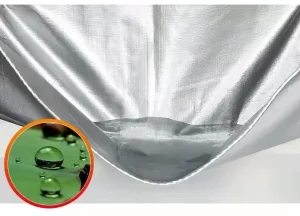
Constructed from a woven high-density polyethylene (HDPE) scrim laminated on both sides with low-density polyethylene (LDPE) film. PE tent fabrics are lightweight, exceptionally waterproof, and economic.
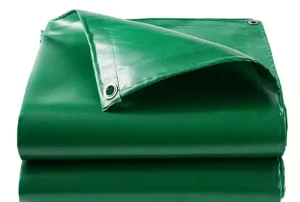
Engineered with a high-tenacity polyester filament base fabric knife-coated or hot-melt laminated with flexible PVC resin. Represents the premium standard for permanent architectural tents.
| Performance Metric | Standard PE Tent Fabric | Heavy-Duty PE / PP Fabric | Architectural PVC Fabric |
|---|---|---|---|
| Weight Range (GSM) | 80 - 140 g/m² | 160 - 300 g/m² | 500 - 900 g/m² |
| Tensile Strength (Warp/Weft) | 600 / 550 N/5cm | 1200 / 1100 N/5cm | 2500 / 2300 N/5cm |
| Tear Strength (Trapezoid) | 80 / 70 N | 180 / 160 N | 350 / 320 N |
| Hydrostatic Head Pressure | > 1,500 mm H₂O | > 3,000 mm H₂O | > 10,000 mm H₂O |
| Temperature Resistance | -20°C to +70°C | -30°C to +80°C | -30°C to +70°C |
| Flame Retardancy Option | Optional (Additives) | Optional (Additives) | Standard (JIS L 1091 / NFPA 701) |
| Expected Service Life | 1 - 2 Years (Outdoor) | 3 - 5 Years (Outdoor) | 7 - 10+ Years (Outdoor) |
For Japanese B2B procurement managers in Nagoya, balancing top-tier material quality with competitive landed cost is a strategic priority. Linyi Xinshengyang Plastic Products Co., Ltd. (operating as Star Tarpaulins) delivers an integrated manufacturing ecosystem built on Industry 4.0 principles.
Operating out of a 30,000 m² modern manufacturing plant in Shandong, our facility integrates the entire value chain under one roof: from raw polymer pellet extrusion and high-speed circular weaving to dual-side extrusion lamination, CNC precision slitting, ultrasonic heat sealing, automated grommet installation, and rigorous laboratory QC testing.
This full vertical integration yields unmatched operational advantages for Nagoya distributors: zero middleman markups, consistent GSM tolerance (±2%), guaranteed batch-to-batch color matching, and rapid production cycles (15 to 25 days).
Automated melt-spinning ensures precise denier control and uniform UV masterbatch distribution.
Advanced looms weave ultra-tight scrim matrices (up to 14x14 mesh) for maximum tensile strength.
Mirror-finish heating rollers apply 100% pinhole-free polyethylene/polyurethane coatings.
Rope-reinforced hems, corner patch welding, and brass/aluminum grommet insertion at automated stations.
How specialized tent fabrics solve complex environmental and logistical challenges across Nagoya's primary commercial sectors.
Temporary modular storage tents deployed in supply chain hubs across Toyota City, Kariya, and Okazaki require 250+ GSM PE/PVC fire-retardant fabrics to protect raw steel coils and stamped body parts from humidity and rain.
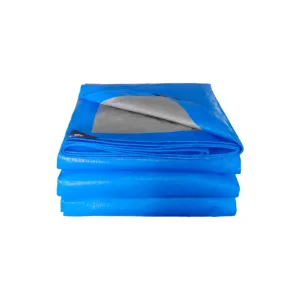
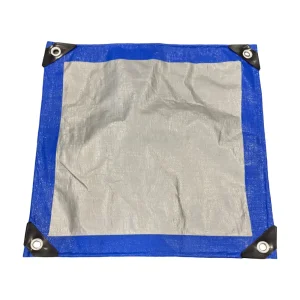
Ocean freight containers, open-top breakbulk cargo, and heavy machinery staged at Nagoya Port docks require UV-stabilized 200 GSM blue/silver PE sheets featuring 100cm eyelet pitch for high-tension tie-downs during coastal winds.
Building renovation, bridge maintenance, and scaffolding work in Nagoya Metropolitan Area mandate heavy-duty flame-retardant mesh and solid PE sheets to prevent debris dispersion and protect workers from typhoons.
Exhibition venues such as Port Messe Nagoya and outdoor festival organizers utilize premium 650-850 GSM blackout PVC tent fabrics offering thermal insulation, UV blockage, and elegant aesthetic finishes.
Aichi Prefectural emergency stockpiles require high-strength, fast-deployment rapid-shelter PE fabrics designed for long shelf storage without polymer degradation or ply delamination.
Horticultural farms surrounding Aichi Prefecture utilize anti-drip, high-light-transmittance clear woven PE tent films for crop shelters, fruit protection, and grain stockpiling.
A practical step-by-step roadmap for Japanese trading houses, purchasing managers, and industrial distributors.
Direct factory sourcing from China provides Japanese buyers with a distinct margin advantage. However, mitigating supply chain risk requires strict adherence to quality verification, customs compliance, and shipping optimization. Below is the standard protocol recommended by our export engineering team when ordering tent fabrics for the Nagoya market:
Define exact mechanical properties before issuing RFQs. Specify required GSM (grams per square meter), mesh weave count (e.g., 10x10, 12x12), color codes (Pantone/RAL), eyelet spacing, and specific flame retardancy standards (such as JIS L 1091 Method A/B testing compliance).
Our factory location in Shandong offers seamless container transport to major Northern China sea ports (Qingdao Port & Lianyungang Port). Direct ocean container routes to Nagoya Port feature fast transit times of only 3 to 5 days, ensuring low maritime freight fees and rapid stock replenishment.
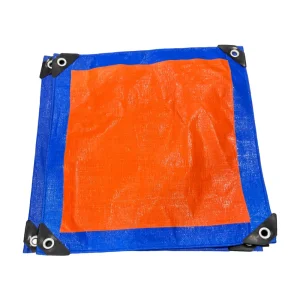
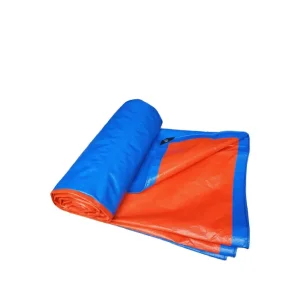
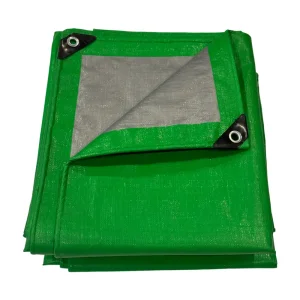
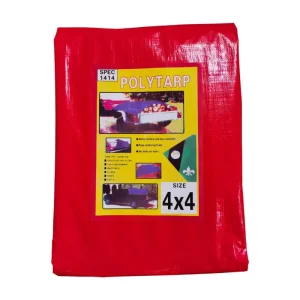
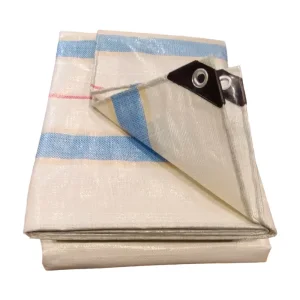
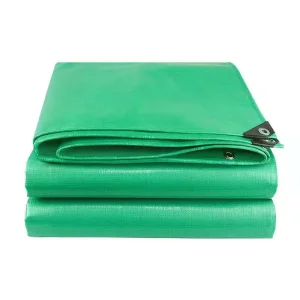
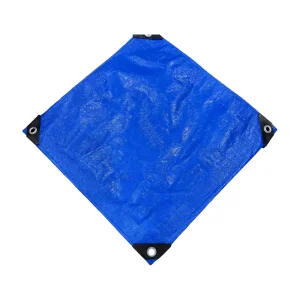
Comprehensive factory-direct fabric rolls and custom-fabricated sheets available for wholesale supply across Nagoya.
Expert engineering answers addressing common technical, commercial, and logistical queries regarding tent fabric supply to Japan.
For temporary short-term construction scaffolding enclosure sheeting in Nagoya, a 100 GSM to 150 GSM PE fabric is usually sufficient. However, for semi-permanent logistics warehouses, machinery storage tents, or port staging shelters exposed to coastal typhoons, we strongly recommend 200 GSM to 300 GSM heavy-duty PE/PP fabric or 550 GSM to 750 GSM knife-coated PVC architectural fabric. Our engineering team can provide precise structural recommendations based on your projected wind load and exposure duration.
Nagoya experiences intense solar radiation during summer months (high UV index). At our extrusion stage, we incorporate 3% to 5% Hindered Amine Light Stabilizers (HALS) into the virgin HDPE pellet mixture. This prevents photo-oxidation, chain scission, and yellowing, guaranteeing that the fabric maintains over 80% of its original tensile strength even after 36 months of continuous outdoor exposure.
Yes. We manufacture customized flame-retardant (FR) formulations compliant with JIS L 1091 (Japanese Industrial Standard for Flammability Testing of Textiles) as well as international standards such as NFPA 701, DIN 4102 B1, and EN 13501-1. FR additives are incorporated during the coating process to self-extinguish flame propagation without producing toxic droplets.
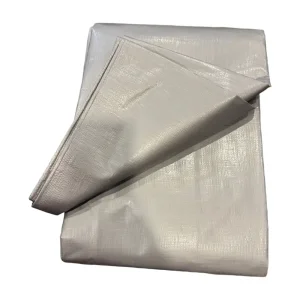
For standard stocked color specifications (such as Blue/Silver, Green/Silver, or Natural White), our minimum order quantity starts from one 20ft container mix (approx. 10 to 12 tons). For fully customized OEM orders (custom colors, specific eyelet spacing, surface logo printing), the MOQ is 3 tons per specification. Standard production lead time is 15 to 25 days after artwork approval. Direct sea transit from Qingdao Port to Nagoya Port takes approximately 3 to 5 days.
Absolutly. Finished tent fabric sheets are cut to exact drawing specifications, edge-welded with heavy-duty inner PP ropes, reinforced with plastic triangular corner patches, and fitted with high-grade aluminum or brass eyelets at custom intervals (e.g., 50 cm or 100 cm pitch). We also provide full OEM branding: high-resolution surface screen printing (up to 4 colors), barcode labeling, and customized outer carton packaging matching your brand guidelines.
We enforce a strict 4-stage Quality Management System ISO 9001 certified. Every production batch undergoes rigorous laboratory testing: Hydrostatic Head Pressure Test (ISO 811), Warp/Weft Tensile & Tear Strength Test (ISO 13934), Eyelet Pull-out Force Test, and Weathering Chamber UV Exposure Simulation. We welcome third-party inspections (SGS, BV, TUV) prior to container loading and issue full Quality Inspection Certificates with every shipment.
Contact our technical export engineering team today for factory-direct pricing, detailed material data sheets, and complimentary sample packs tailored for the Nagoya market.